Editor’s note: This is a guest report written by Jorg Oostendorp, who went together with Maurice Boeijen to the second edition of the London Soundtrack Festival.
On the 9th of April 2026, the second edition of the London Soundtrack Festival (LSF) started.
The setup of the festival was a bit smaller than last year’s, but the program was still interesting.
It was smaller in the way that there were only three concerts and no special day for game soundtracks.
During the four-day festival, there were several panels and movie screenings.
It was not possible for us to attend all the panels, but the ones we did attend were interesting. From several other festivalgoers, we learned that every panel was worth attending.
So what did we attend this year?
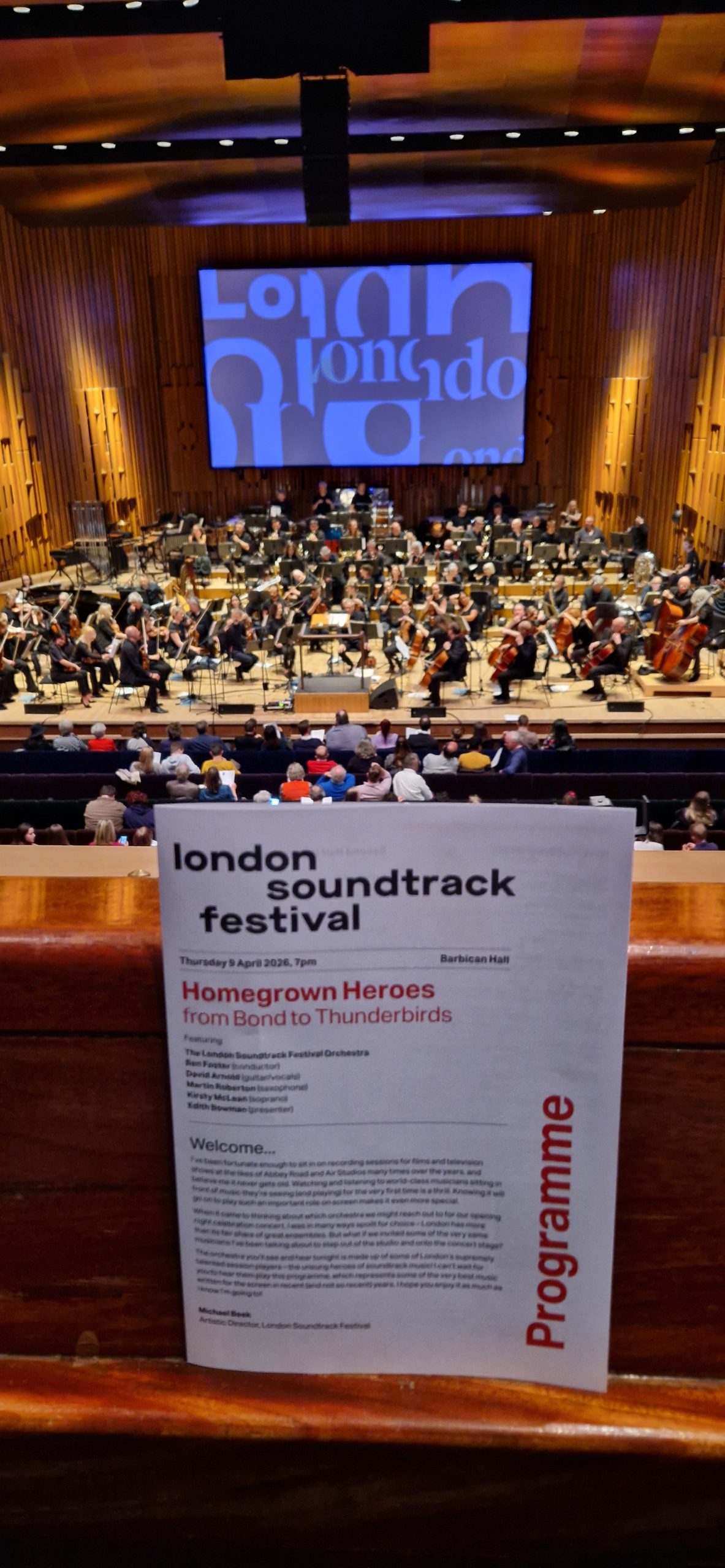
On Thursday, the first day of the LSF, we attended only the evening concert, ‘Homegrown Heroes – From Bond to Thunderbirds’.
This concert was fully dedicated to British composers or British productions. The first half of the concert was more focused on TV series. The second half was fully dedicated to David Arnold and his music.
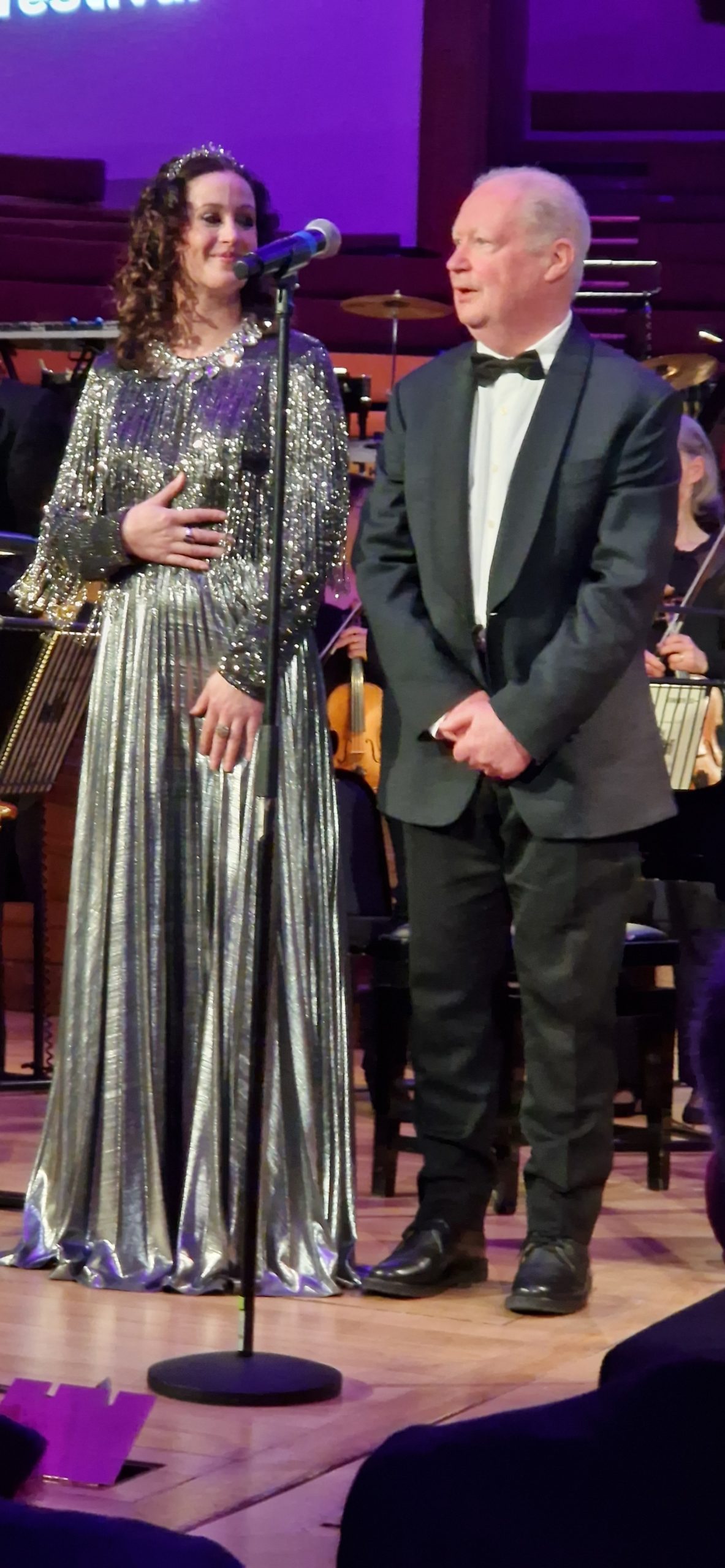
David Arnold is also the recipient of this year’s Christopher Gunning Inspirational Award. Last year’s winner was Howard Shore.
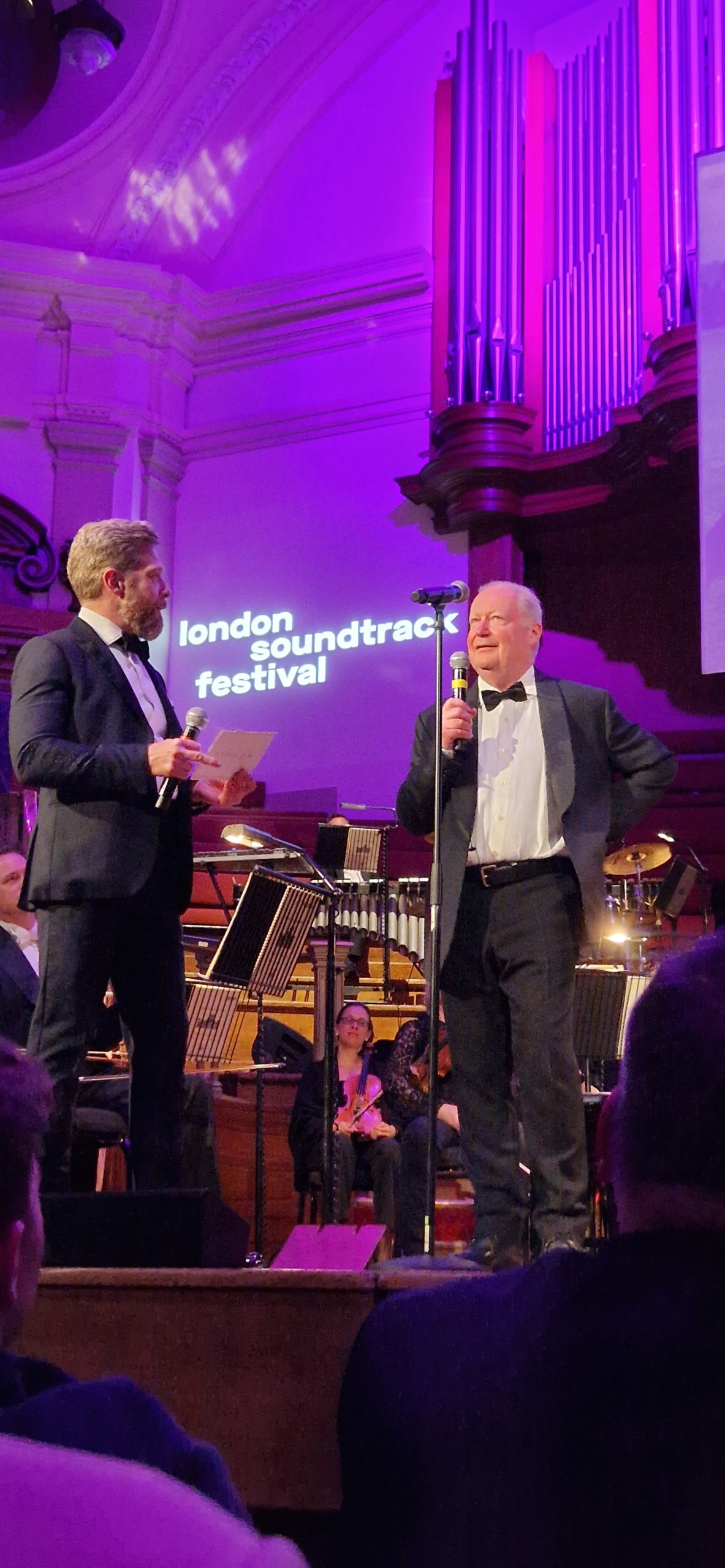
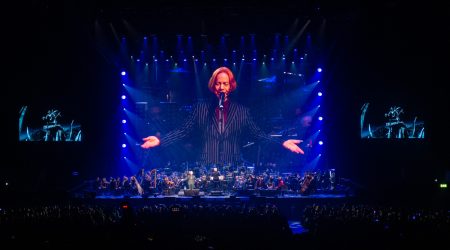
The award was presented by Michael Beek (artistic director of LSF) to David Arnold at the beginning of the second half of the concert. After that, David took to the stage and played along with the orchestra for some of his works. He also performed some of the famous songs he wrote, including “Play Dead” (from Young Americans), which he wrote for the singer Björk.
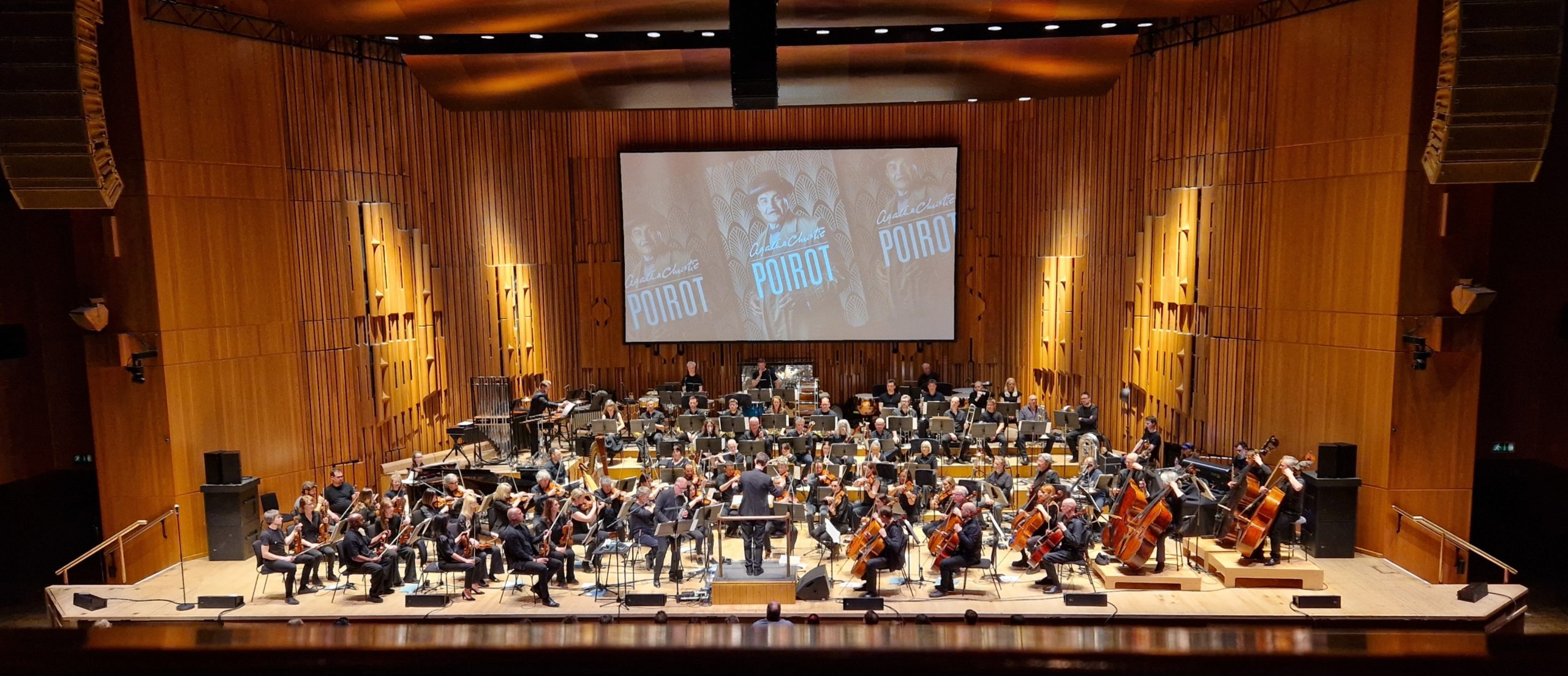
The concert as a whole had some beautiful and special renditions of the Poirot-theme, All Creatures Great and Small suite, Enola Holmes, among others.
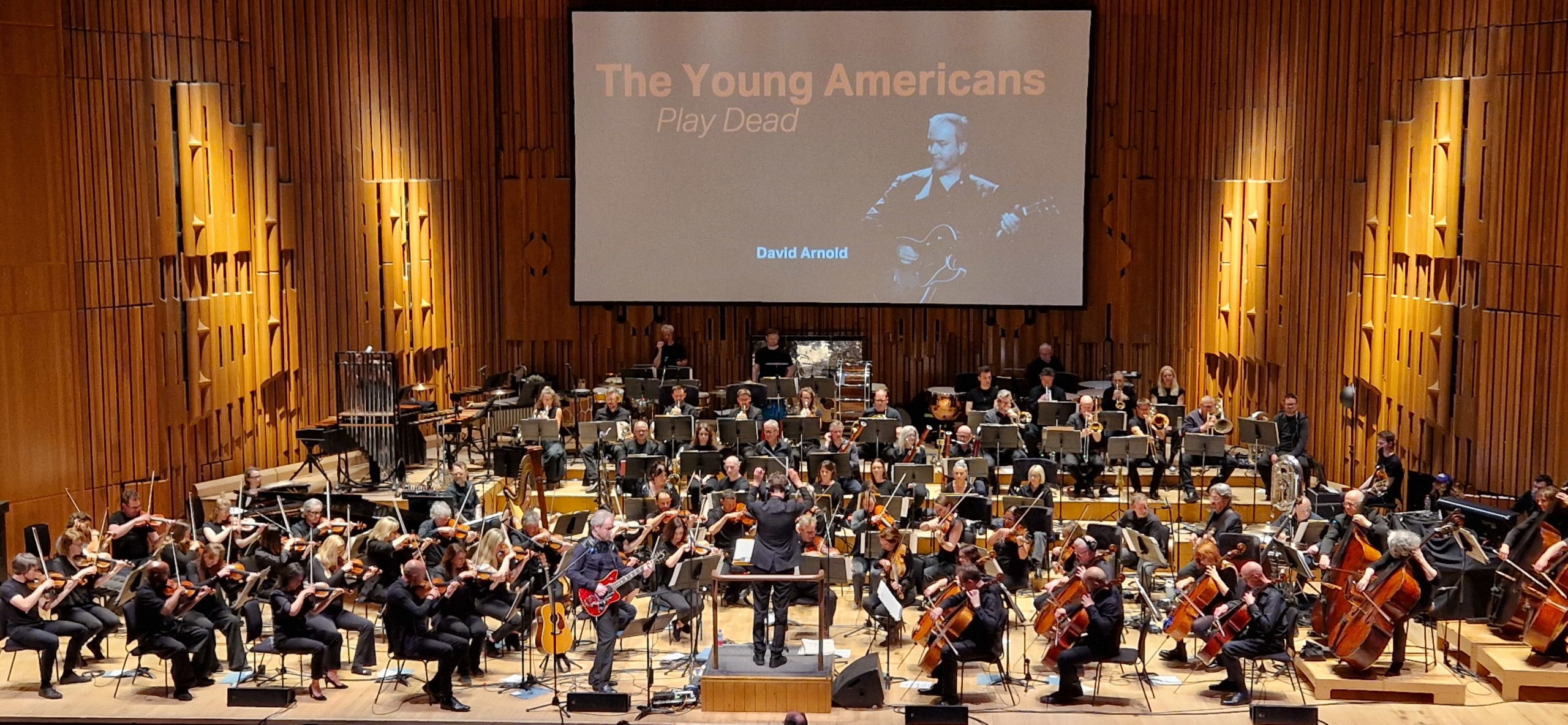
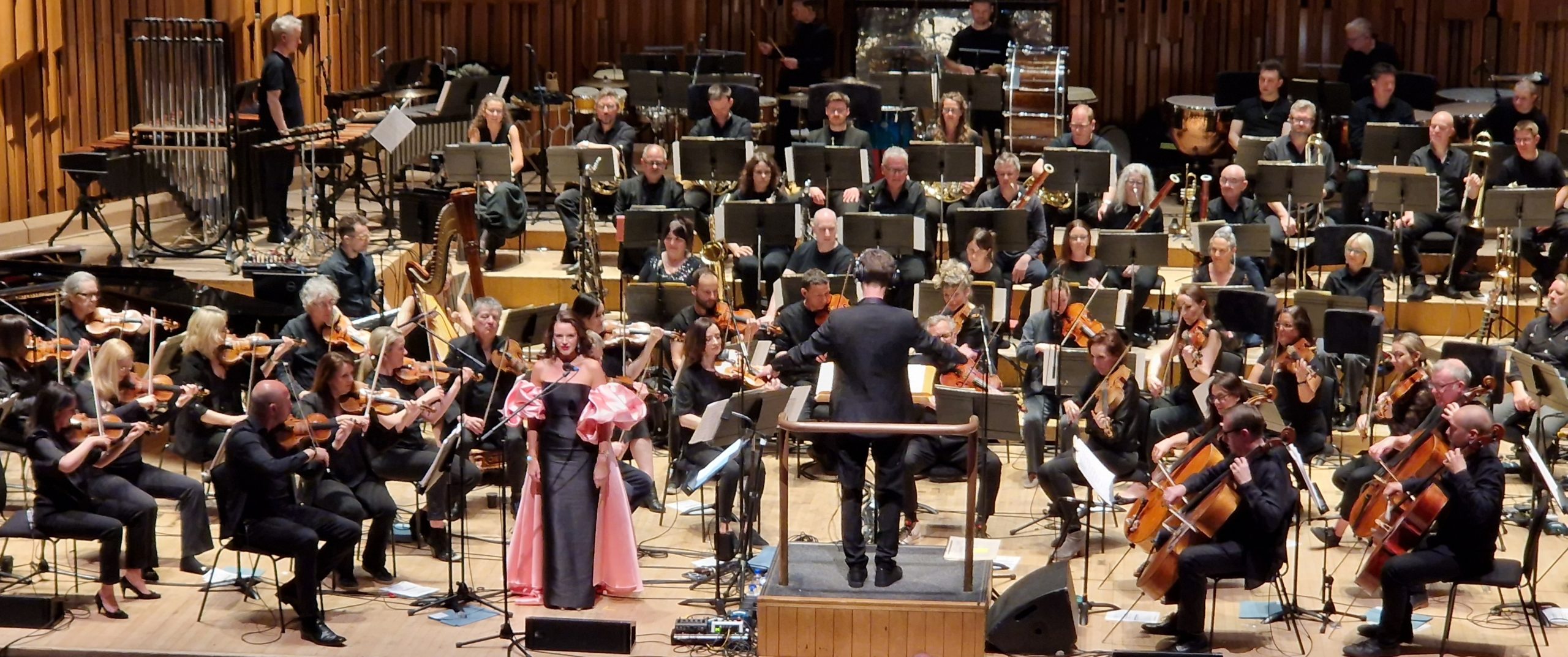
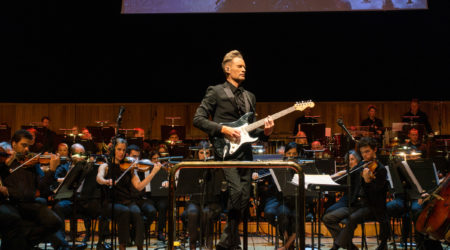
What made it a special event was the orchestra itself. It is assembled especially for the festival and is called the London Soundtrack Festival Orchestra. Its members are all musicians who are experienced in playing music for soundtracks. Most of them had participated in recording sessions for the works that were played during the concert. You could see that the musicians were enjoying themselves enormously during the concert. But sometimes it also showed that they were not used to playing together regularly, but that made the experience no less enjoyable.
Concert information
Playlist of the evening was as follows:
First half
- Ron Woodwin – 633 Squadron: Theme
- Christopher Gunning – Poirot variants
- Dario Marianelli – Atonement: Briony
- Isobel Waller-Bridge – The Boy, The Mole, The Fox and The Horse: Home
- Ben Foster – Screaming from the Back: The Intriguing Story of Brian Epstein: Main theme
- Jack Halma / Natalie Holt – Rivals: Theme
- Miguel d’Oliveira – First Dates: Suite (Dates on a Train / The Essex Tango)
- Alexandra Harwood – All Creatures Great and Small: Suite
- Daniel Pemberton – Enola Holmes: Wild Child Ending
- Julian Nott – Wallace & Gromit: A Close Shave: Theme & Chase
- Barry Gray – Thunderbirds: March
Second half (all works by David Arnold)
- Independence Day – End Credits
- The Young Americans – Play Dead (song)
- Godzilla – Theme
- Sherlock – suite
- The Tiger Who Came to Tea – Hey Tiger (song)
- Good Omens – suite
- Stargate – theme
- The World is Not Enough – The World is Not Enough (song)
- Quantum of Solace – Night at the Opera
- Casino Royale – City of Lovers
- Tomorrow Never Dies – White Knights
- Casino Royale – You Know My Name (song)
The last song was the encore at the end of the concert.
The concert was conducted by Ben Foster.
The evening was presented by Edith Bowman.
The soloists of the evening are Kirsty McLean (Soprano) and Martin Robertson (Saxophone).
The concert was held at the amazing Barbican Hall.
On the second day (Friday), there was no concert, but we did go to a panel and a screening.
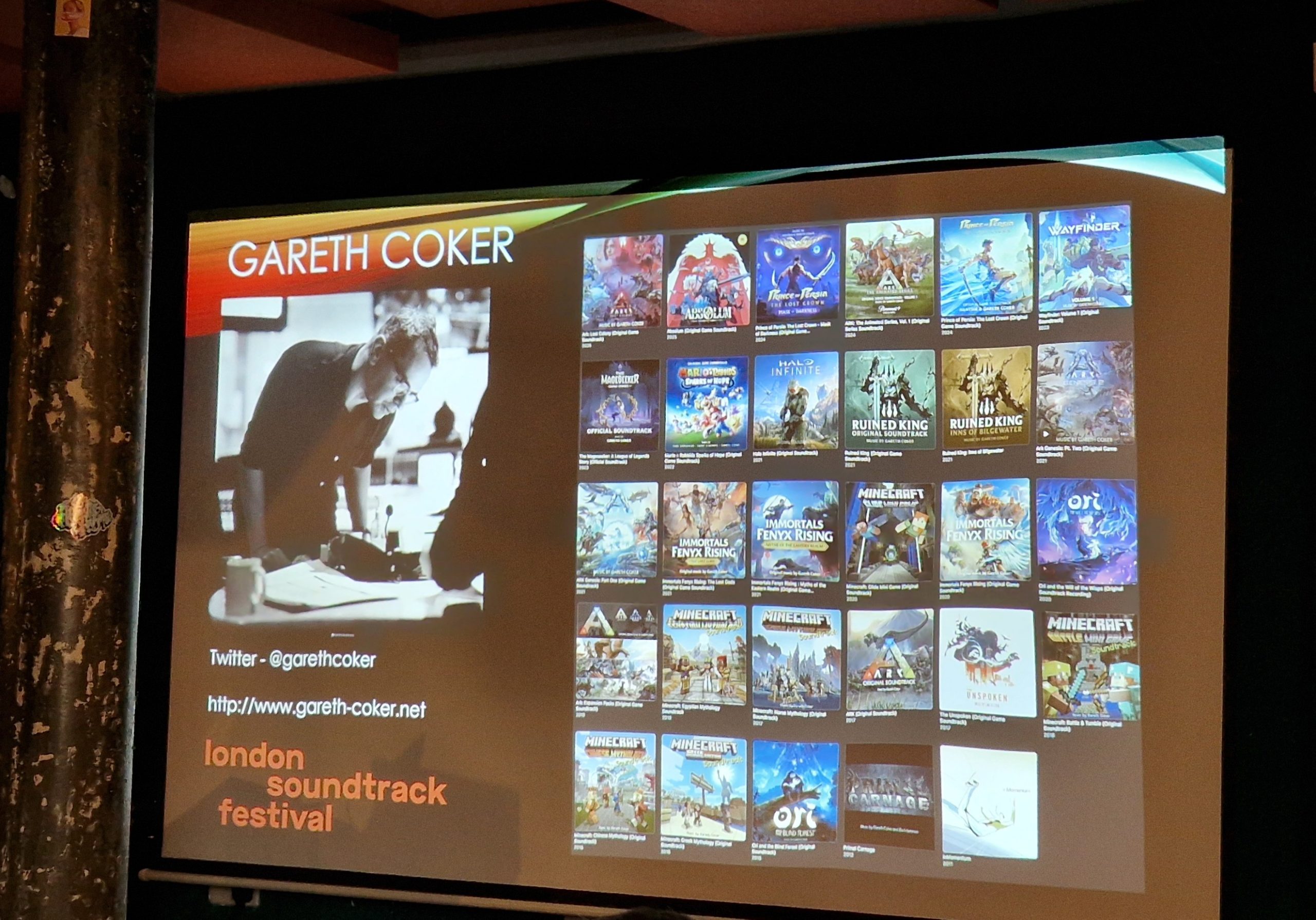
The panel was a ‘Masterclass Games Music with Richard Jacques & Gareth Coker’. The masterclass was held at the StrongRoom.
Gareth and Richard showed us their process in making music for games. Gareth used a certain sequence for the Ori games he worked on, to show what the function of music can be, how it shows the gamer what to expect and what to do with music if a goal or switch point is reached.
Even if you are not a gamer, these masterclasses always tempt you to go and play their games, even if it’s just to listen to the great music.
Richard took us through the whole process from the beginning to the end in creating the music for the game Guardians of the Galaxy. It was interesting to see how much the music changes during the development of a game.
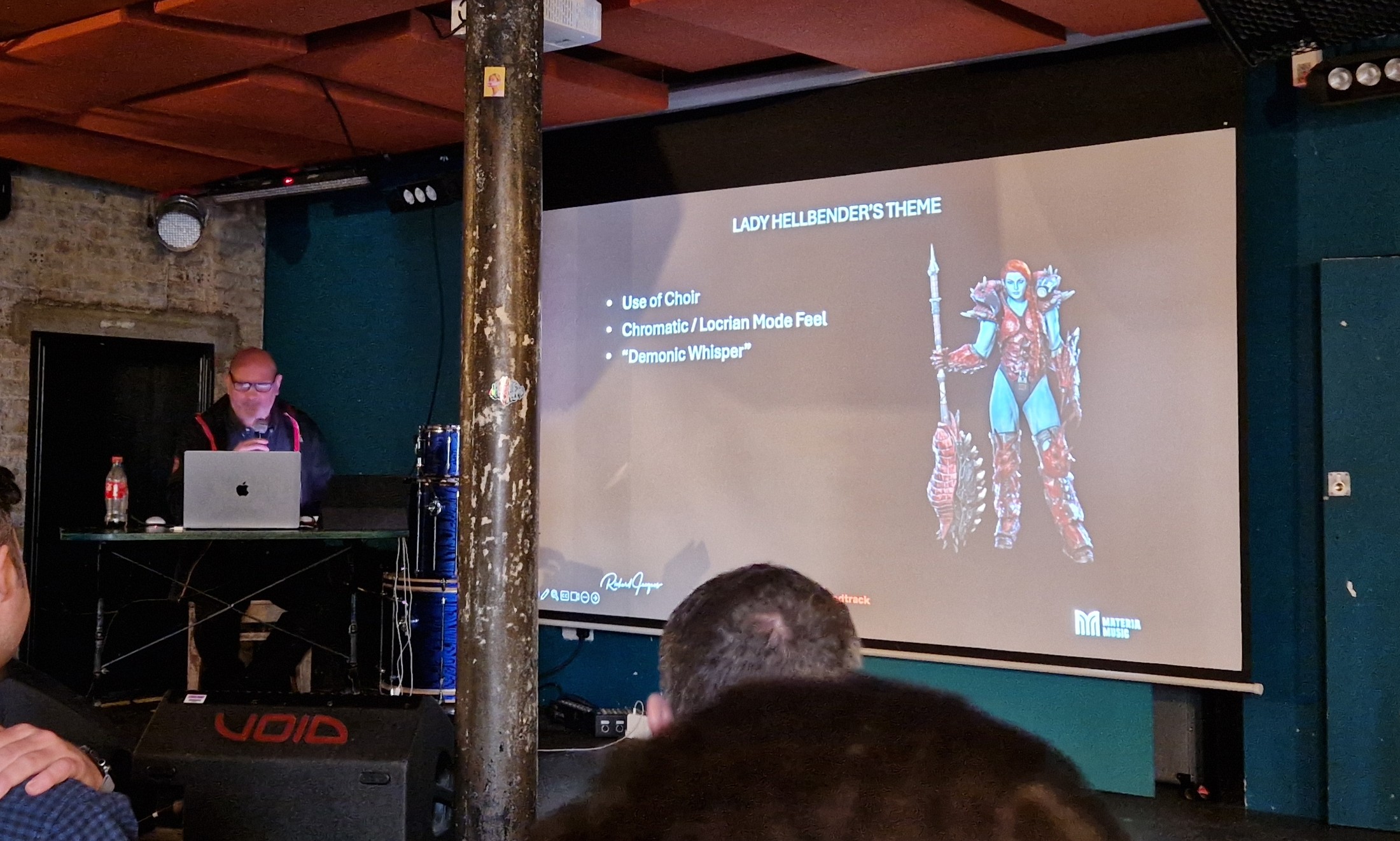
Richard and Gareth both gave some valuable tips to all the composers in the room. Be sincere and honest in your work. Don’t cheat or lie, because if you are found out, it means the end for you in the business. Also, make sure your music is accessible and easy to find. You need to get the ball rolling, so to speak.
It was interesting and surprising to see that most of the attendees were (young)composers themselves. That even surprised Richard and Gareth. What was even more interesting was the fact that only a few were gamers themselves. According to Richard and Gareth, you need to play the game you are scoring, or be in close contact with someone who does play, otherwise you will not understand the subtleties and changes of the game well enough to write your score for it. The masterclass was entertaining, and hopefully, next year, there will be a whole day and a concert dedicated to game music.
After the masterclass we went back to the Barbican for a screening of the movie Emma, with an introduction by Rachel Portman. Rachel is the composer of the version of Emma from 1996. Rachel was interviewed by Aisling Brouwer. Rachel gave us some insight into the development of the music for Emma.
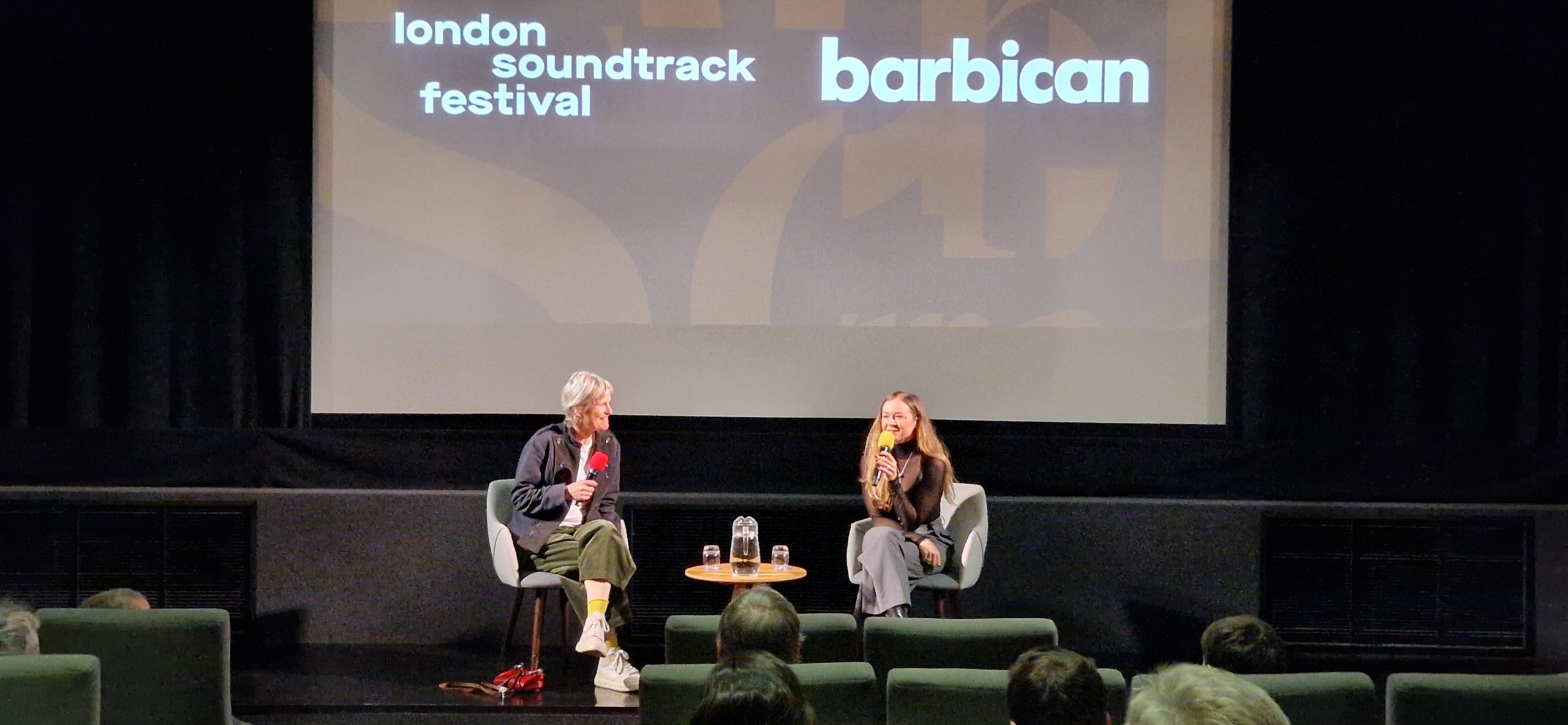
Following the talk, Rachel invited us all to watch the movie Emma with her.
It had been a very long time since we last saw the movie, but it was great to see it again. The music from Rachel was great, especially now with some of the background we got from her.
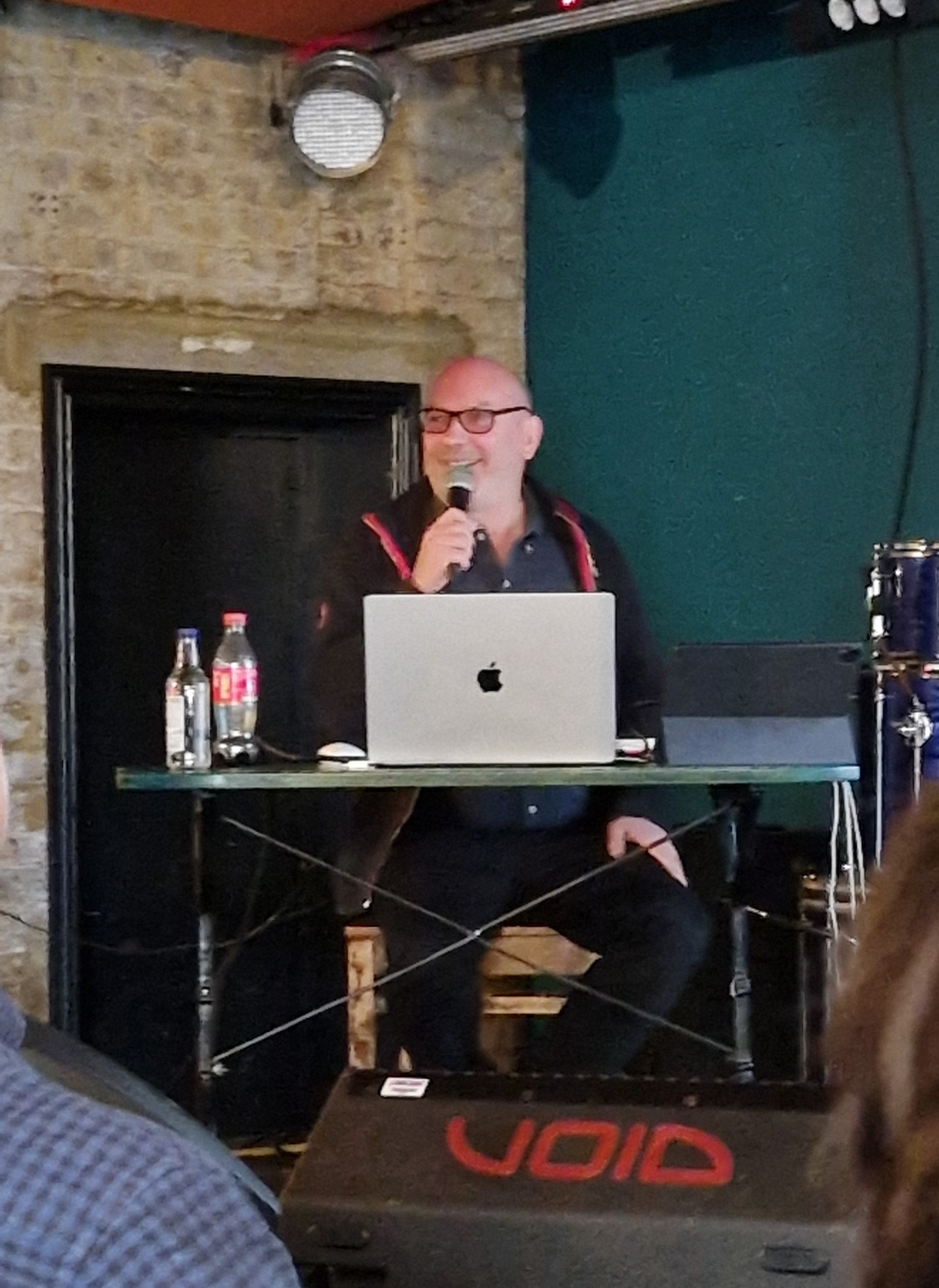
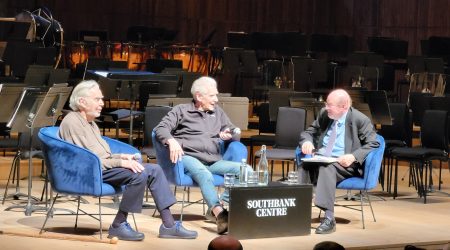
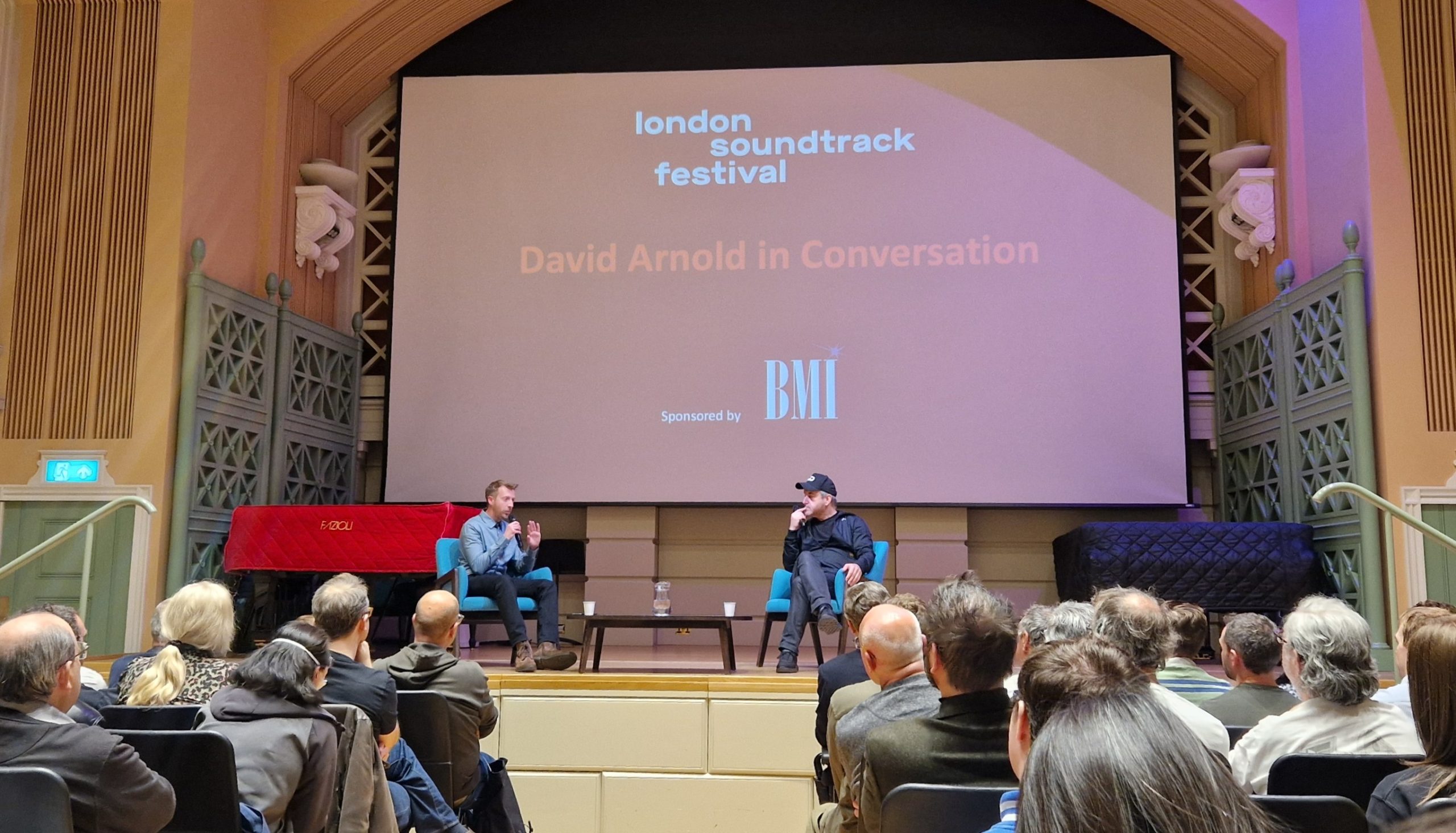
On the third day (Saturday), we went to the panel “David Arnold in conversation”.
The talk was held at the Royal College of Music.
The host for the talk is Sean Wilson.
David begins with a look back at the concert on Thursday. He found it an amazing experience being there with an orchestra that understands film music and soundtracks. A mainstream classical orchestra has the tendency to make the music sound more like classical music instead of music for film, TV or games.
A soundtrack is meant to sound for and like the medium it’s made for. If it can hold its own outside it, then that’s a bonus. Nowadays, you see less and less music that can stand on its own because it’s too electronic or experimental. That music is difficult to translate to an orchestra.
David feels that the director is the owner of the music. It’s his film, and he has to make everything fit together, so he has to have the opportunity to change the music as he sees fit. There is a difference between Hollywood and the rest of the world. In Hollywood a composer usually has less to say about the way the music is used than elsewhere.
It is interesting to hear David talk about his music.
Afterwards there was an opportunity to get autographs and pictures with David.
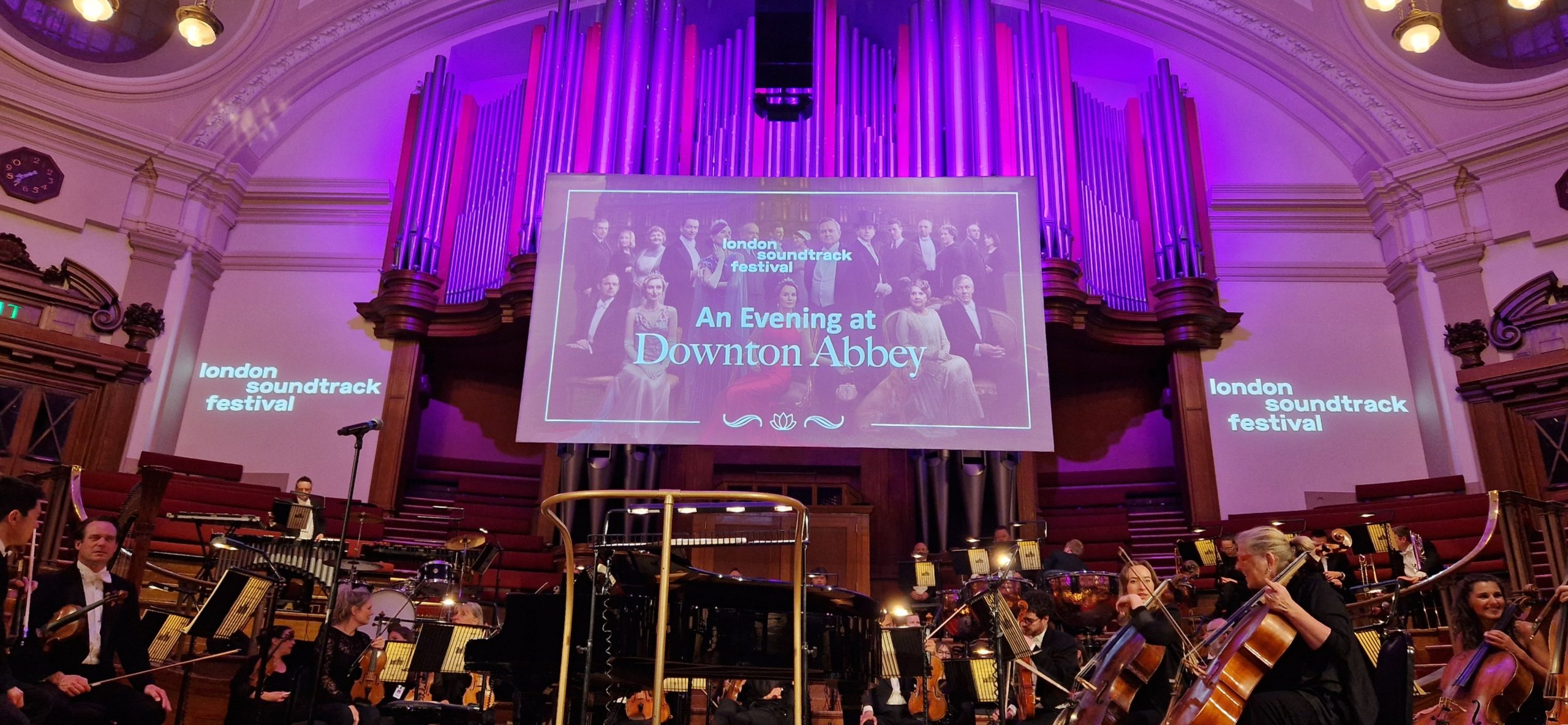
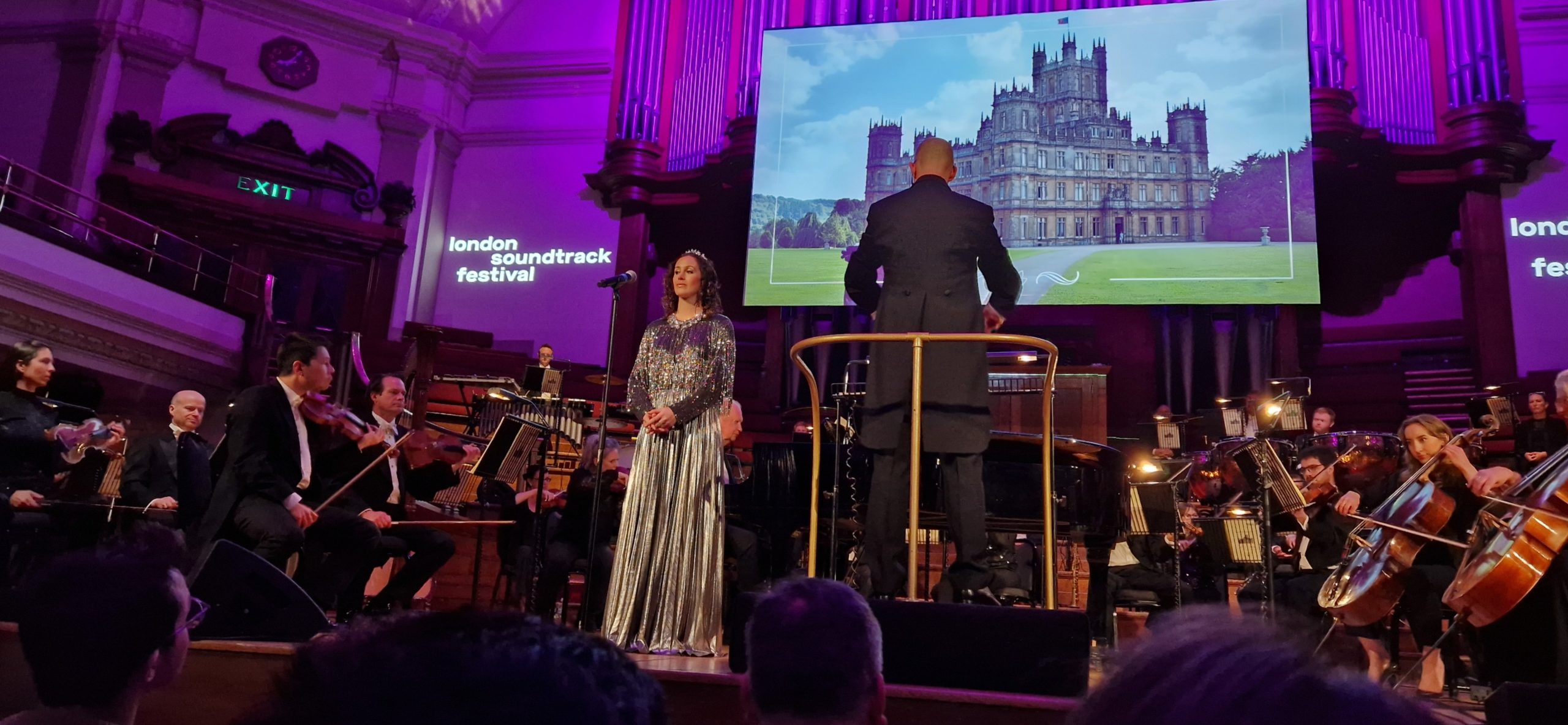
In the evening we attended the concert ‘An Evening at Downton Abbey’ at Central Hall Westminster.
We were sitting in the third row from the front when the concert started. I was blown away by the sound that came from the orchestra. It was like you were sitting inside the perfect recording of the beautiful tunes of Downton Abbey.
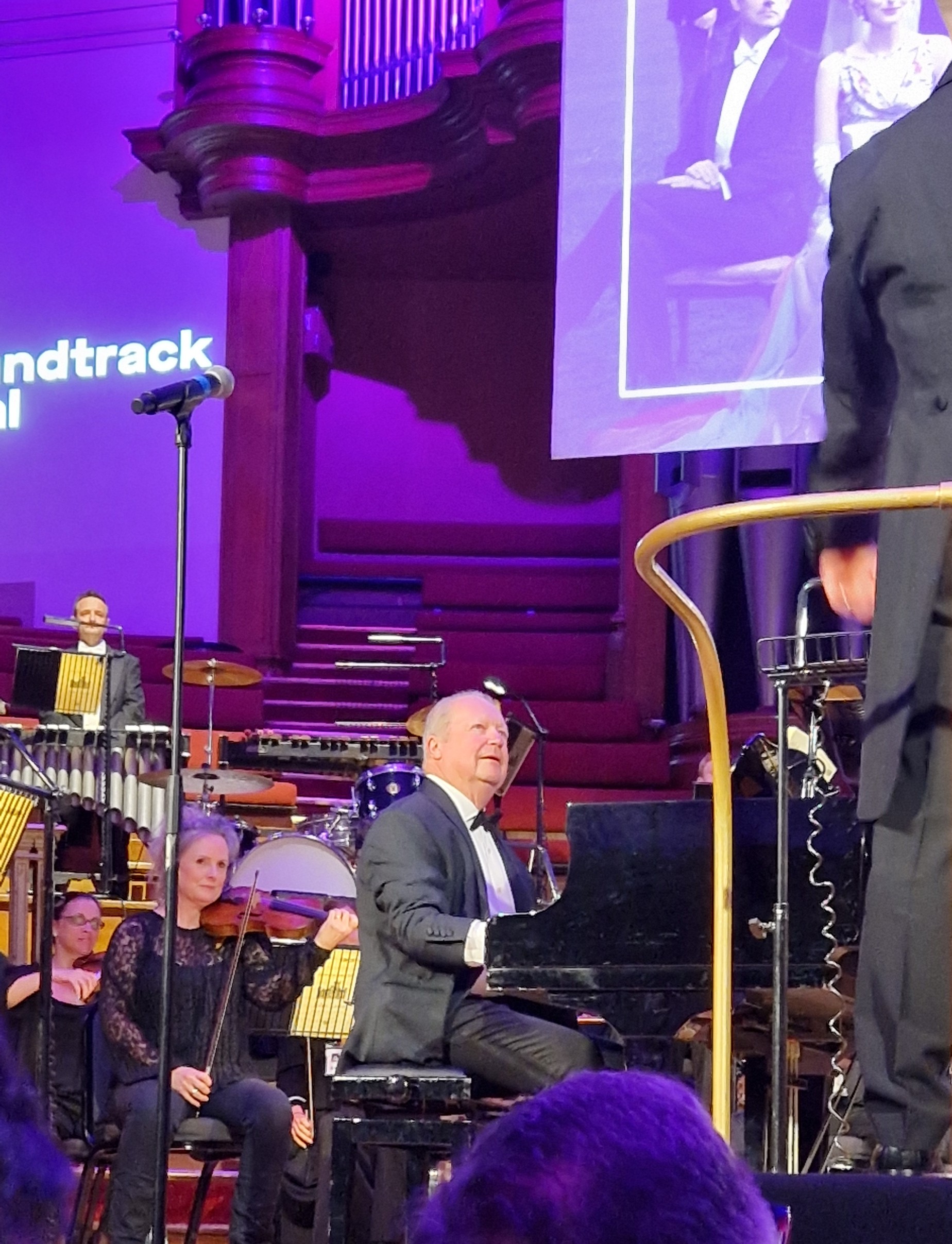
The orchestra played flawlessly and knew the music very well. It turned out that this was the original orchestra that had recorded all the music for the series and movies. Also, Eurielle is the original vocalist who’s heard on the original recordings.
It was a really special experience to witness.
During the music, stills from the series and movies were shown, and also some backstage pictures.
After the concert, John Lunn came out to hand out autographs and take pictures with the fans. During one of these moments, he let it slip that he’s not finished with Downton Abbey. The fans who were present cried out in joy!
Concert information
The programme for evening was:
First half:
- Downton Abbey suite
- Cote D’Azur
- Such Good Luck
- Kinema
- Damaged
- Did I Make the Most of Loving you? (song)
- Modern Love
- Life After Death
- Duneagle
- Two Sisters
- I’ll Count the Days (song)
- A Grand Adventure
Second Half:
- A Night in Picadilly
- Story of My Life
- Love and the Hunter
- Nothing Will Be Easy (song)
- Elopement
- Violet & Escapades
- The Butler and The Housekeeper
- The Last Farewell
- Cortege
- Next Generation
- A Royal Command
The music was played by the Chamber Orchestra of London, conducted by Alastair King.
The evening was presented by Zeb Soanes.
The songs were sung by Eurielle.
The composer John Lunn was also present and played the piano.
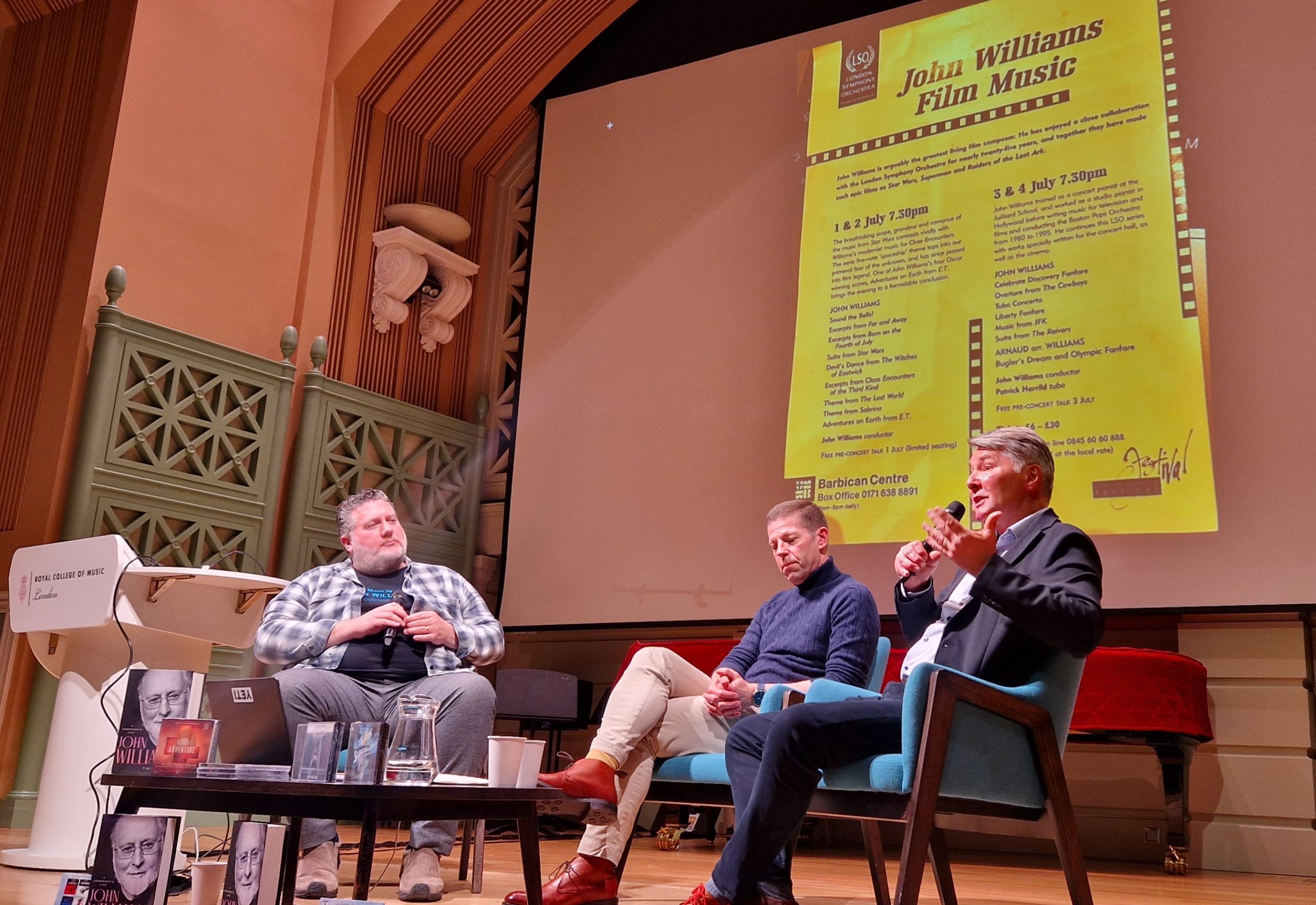
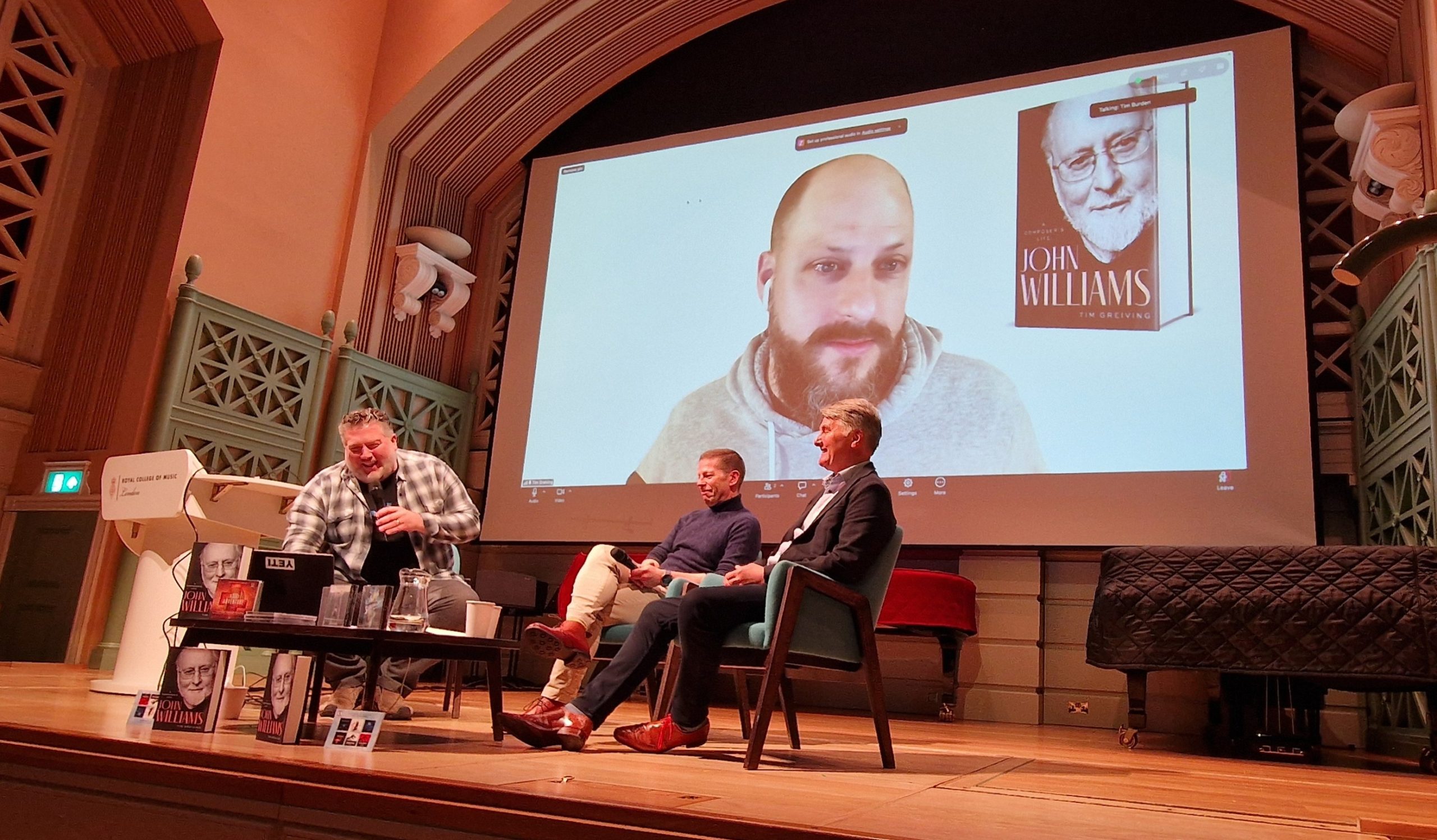
On Sunday, the last day of the festival, we went to a panel called ‘John Williams: A Composer’s Life’. The panel was held at the Royal College of Music.
Before the festival started, it became known that the author of the book, Tim Greiving, could not attend in person but would join via a live video connection from Los Angeles.
The host of the panel was Tim Burden. With him on stage were two people from the London Symphony Orchestra (LSO) who have played multiple times with John Williams. They were David Jackson and Neil Percey, both percussionists.
Tim began the panel with an introduction video about John Williams, called ‘John Williams in London: a Celebration ‘.
Via the video link, Tim talks about the struggles he faced in making the book. It took him several years to get John Williams to agree to participate in the making of the book. In the end, John did, and the book is now filled with memories of John that wouldn’t have been part of the story otherwise.
Tim also talked with David and Neil about their experiences working with John. Tim showed us different pieces of music that even changed during the recording sessions.
That gave us, the audience, a special insight into the workings of John Williams.
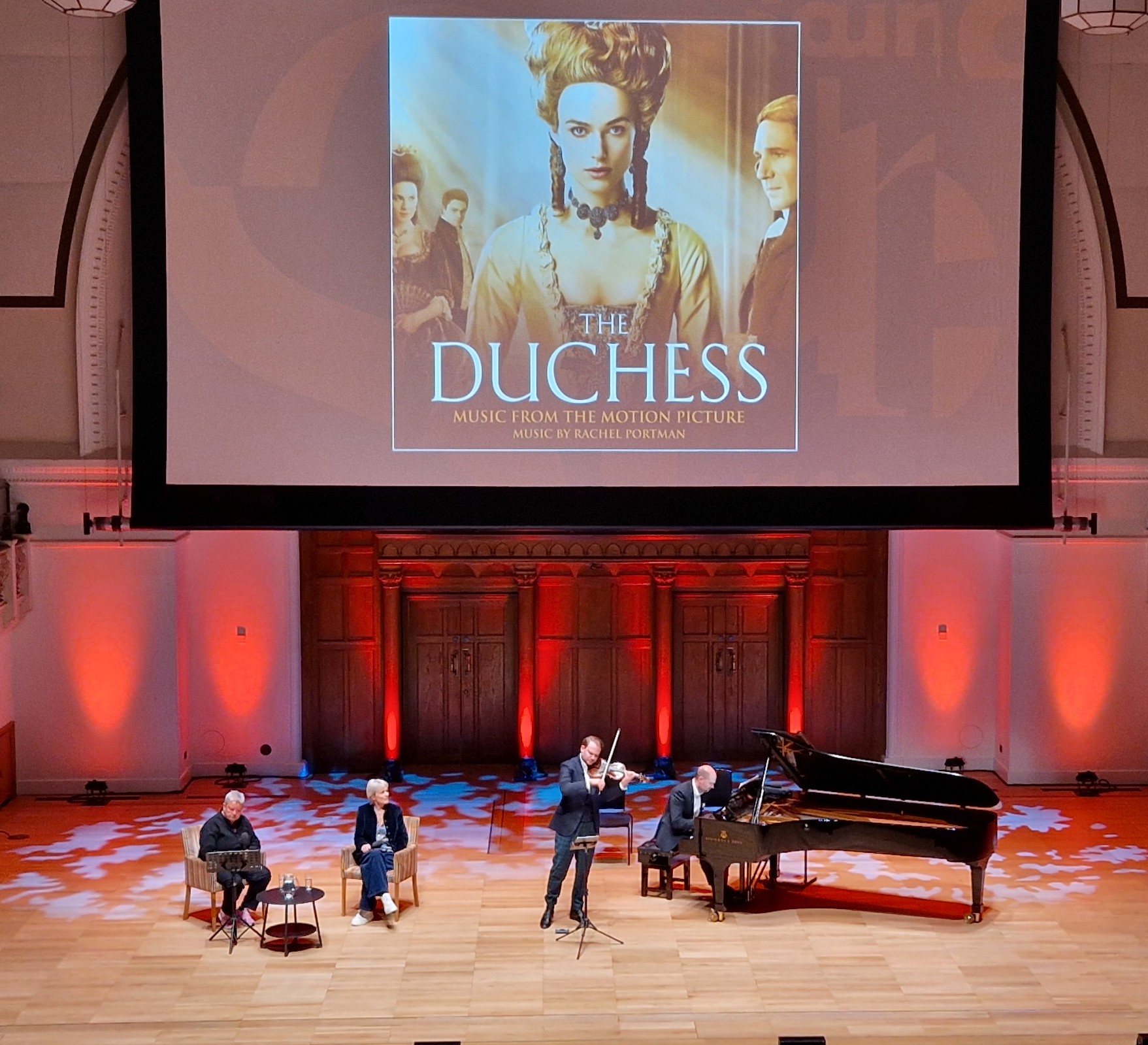
In the evening, we had the closing concert of the festival, ‘Rachel Portman & Friends: Beyond the Screen ‘.
The concert was held at Cadogan Hall and was presented by Gill Graham.
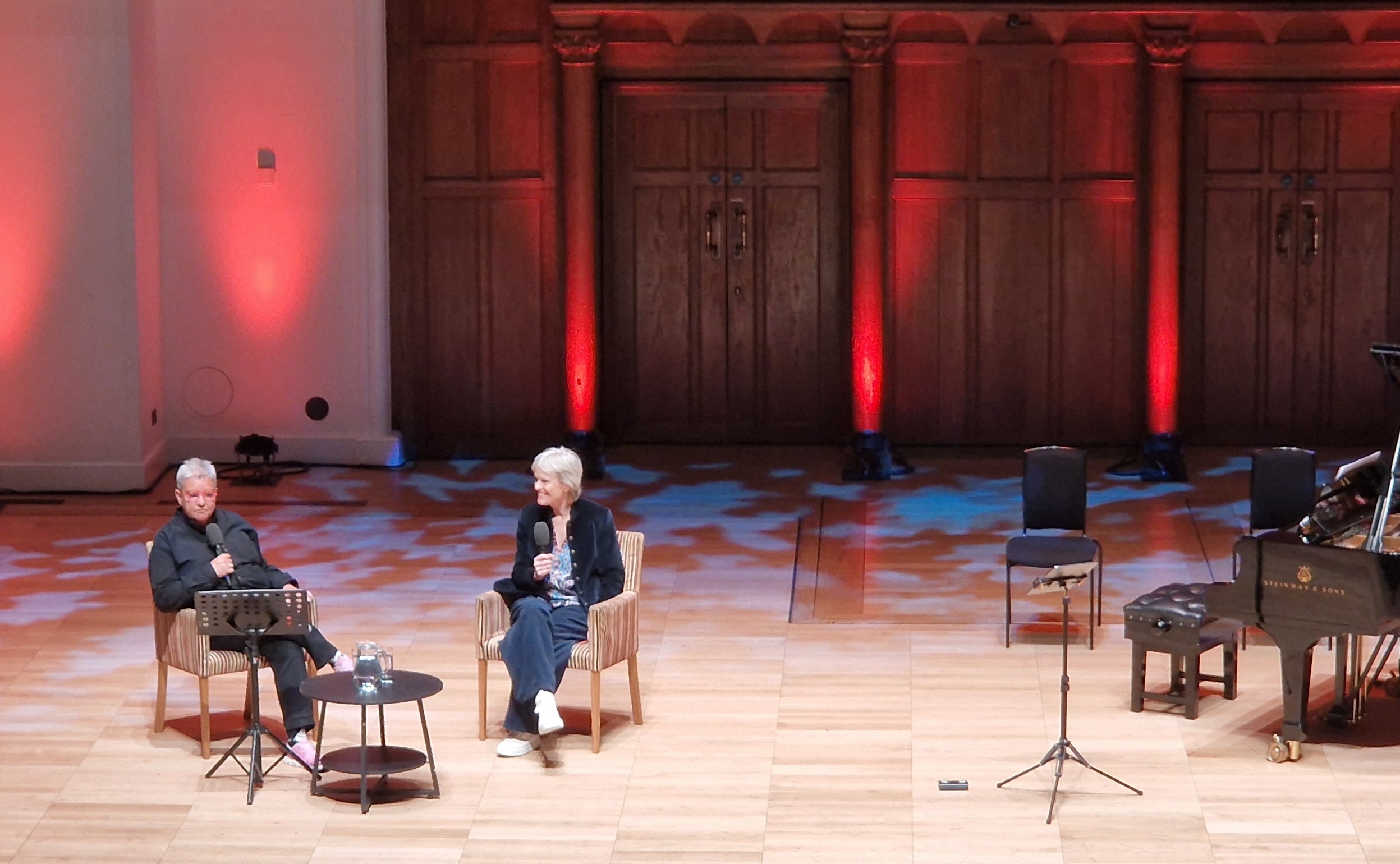
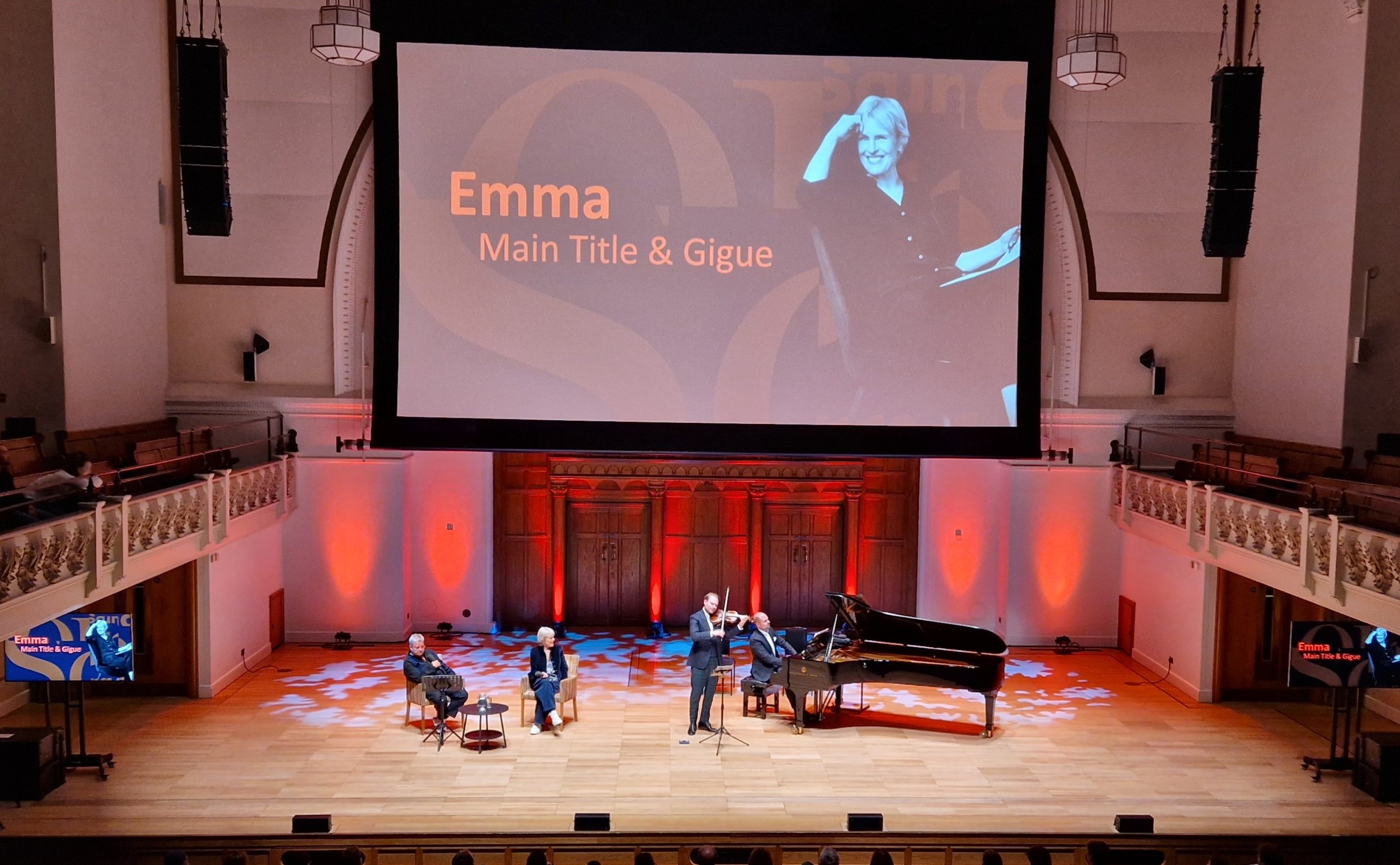
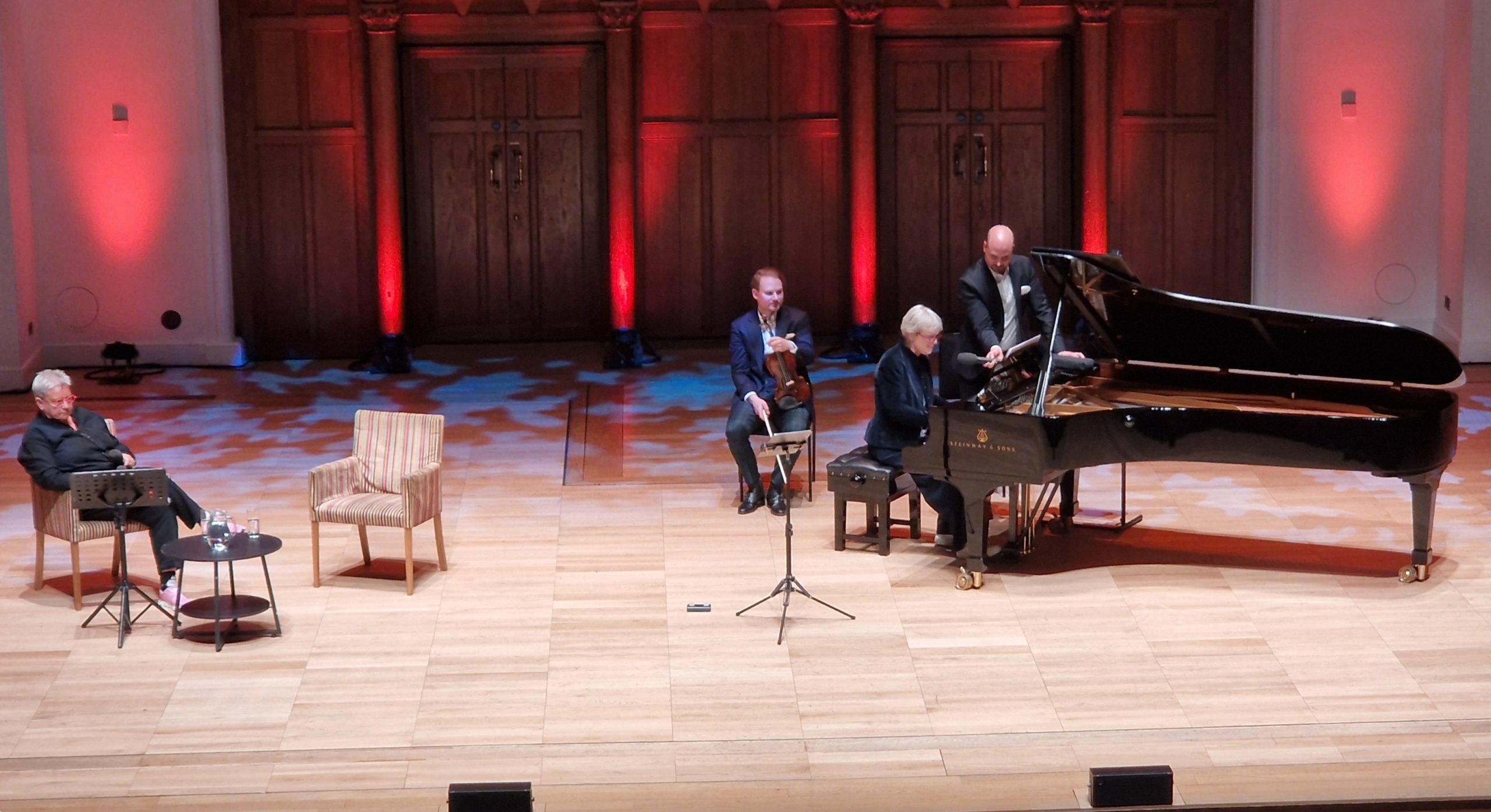
The night turned out to be more of a masterclass or conversation with Rachel Portman than a concert. Gill and Rachel talked about her life and the music. A lot of musical pieces from Rachel were not performed live but were shown in their original form on a big screen.
The pieces that were played on stage were performed by the brothers Niklas and Nils Liepe. Niklas played the violin and Nils the piano.
On two occasions Rachel herself sat behind the piano and played her music. That was an amazing experience, because she doesn’t play in public very often.
The night was not what I had expected and did not suit the venue very well, but the music was great to hear, and the whole experience was very entertaining.
Concert information
The music that was performed live was:
First half
- Emma – Main title and Gigue
- Chocolat – Chocolat sauce & Vianne Sets up Shop
- Flight
- The Cider House Rules – Theme & Goodnight You Kings
Second Half
- The Duchess – Theme
- One Day – Theme
- Never Let Me Go – The Pier
- Bel Ami – Theme
- Still Live – Theme
- Dolomites, Pale Mountains – Vajolet Towers
- Eventide
So now the second London Soundtrack Festival is behind us. We can say that overall, we enjoyed it, but it was not as great as we had hoped.
There were only two really big concerts, and the number of panels wasn’t all that much either.
The festival was smaller than last year, but it still wasn’t a cohesive thing. There was almost no promotion before the festival, and no visibility of it at the venues they were using.
When you were at a panel or masterclass, you really didn’t get the feeling you were at a festival.
I hope this will get better next year.
But the biggest problem of the LSF is the cost. If you are coming from outside the UK to attend the festival, it’s not cheap. You have travel and hotel costs, but also the costs for the concerts and panels. The panels are especially really expensive to attend. Twenty-two pounds for panels is a lot of money, especially when you have no idea what to expect.
This, and the lack of promotion, is maybe also the reason why the festival was not attended by a lot of people. The panels and screenings (except for Wallace and Gromit) were not sold out, but also none of the concerts were. Most concerts had sold only half the tickets. If even the Downton Abbey concert on a Saturday night can’t sell tickets, then you know that something went wrong somewhere.
Let’s hope Michael Beek and his people find out what the issues are and fix them for next year’s edition, because it needs and deserves to be fixed.
The London Soundtrack Festival is worth it!