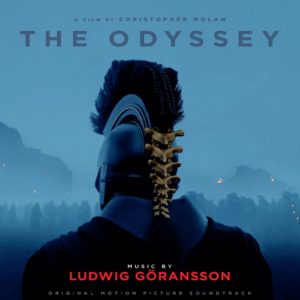
Christopher Nolan is one of the most successful filmmakers working today, making high-budget movies that take him a couple of years to complete. After working with Hans Zimmer for a long time, he started collaborating with Ludwig Göransson to write the music. Following TENET and Oppenheimer, for the latter of which Göransson won an Oscar, it was time for their third film, The Odyssey. It is a movie that retells the well-known story from the ancient Greek poem by Homer with the same name, but that is something you probably know already, because the film is so successful that everyone is talking about it.
When you think about the stories from Homer’s poems, you have to keep in mind that they are from two distinct poems connected to the Trojan War. The Iliad is about the war itself, and is action-packed with stories about battle, glory and honor. The Odyssey is still about adventure, but it is more about Odysseus as a tired father who wants to go home to his family. This more intimate approach is reflected in the music for The Odyssey, because where you would expect an epic orchestral score for a historical drama like this – as has been done for movies like Kingdom of Heaven, Gladiator, or a film sharing the same world like Troy – for The Odyssey Christopher Nolan explicitly asked Göransson not to use an orchestra but to focus on instruments from that time period instead.
One of those instruments is the ancient aulos, which looks like a double flute. Two of the main themes are played on that instrument in “Odysseus” and “Penelope,” tracks that are named after the characters they represent. These two tracks represent the intimacy of the score very well. They are the main themes of this film, but there are also many other smaller themes, like the one for Odysseus’s kingdom, Ithaca, as heard in the track “Ithaca,” for example.
Other important ancient instruments used in the soundtrack are the lyre and many bronze gongs. A great showcase for these instruments and how they are used in the film music can be heard in “The Trial of the Bow / Vengeance.” You can hear Odysseus’s theme on the gongs at the start of this track, and after a short stretch of tense electronic music, the theme continues slowly on the lyre building to a climax at 2:39, which is where in the film Odysseus plucks the string of his bow after successfully stringing it.
When listening to the score, I heard many exciting musical ideas. Zeus gets a motif of three mysterious notes, and in “Zeus’s Law” the sound of thunder concludes the track marvelously. The human voice also appears occasionally. In “Calypso / Agamemnon” you hear some ominous-sounding singing by a women’s choir. The men also sing on this score with “Menelaus, Husband of Helen” as a good example, before a solo vocalist takes over to sing what sounds like a lament. A dramatic slow version of the Odysseus theme is sung by the men’s choir, as can be heard at the end of “Laestrygonians,” in contrast to the bold electronic statements that precede it. These are the examples that I would like to mention, but there are more spots with vocals to be experienced in the music.
As someone who really likes thematic ideas that reappear at the right moments in the film, I enjoyed many musical moments in score. There are, unfortunately, also a few aspects I liked less. “Cyclops” contains just a bunch of horror-style sound design, which fits the gruesome sequence in the film, but it is not fun to listen to. “Troy” and “Hades” are musical buildup tracks that serve their purpose of creating tension well, but too long as a listening experience away from the film.
I knew before seeing the film and listening to its music that Göransson would not create something traditional, but at the same time, I did not expect to like and dislike this score that much. The main problem I have with it is that there are many fantastic ideas implemented in the music to support the story and visuals on screen, but despite all those ideas, they don’t register in the film. After seeing it, I could only pinpoint a handful of moments in this three-hour movie where the music stood out. Only after listening to the soundtrack again did the music start to click, but by then it was too late.
The way I feel about the music for The Odyssey is exactly the opposite of how I felt about Göransson’s score for TENET. The music for that film was very present while watching it, but it was too complicated with so much of the music playing backward. For The Odyssey, I understood the music, what it represented and its purpose in the film, but I could not hear it while watching the movie. Not using an orchestra is something I have no problem with. There are many outstanding scores without one, but for a soundtrack to impress me, I need to hear it in the film. I am not sure if it was intentional, but it felt that the music was not allowed to be present, so that use of the theme while Odysseus plucked his bow would make a huge impact. It’s an idea that will probably win Göransson his fourth Oscar. I, on the other hand, prefer music I can actually hear for a better movie experience, because I did like The Odyssey, but it was not the best film I have seen this year.
Listen or buy
- Buy this soundtrack from Amazon or Apple Music
- Listen to this soundtrack on Spotify
Tracklist
The highlights are in bold.
- Zeus’s Law (3:35)
- Ithaca (5:41)
- Penelope (4:16)
- Telemachus (3:59)
- Calypso / Agamemnon (3:59)
- Let’s Go Home (3:11)
- Cyclops (6:00)
- Menelaus, Husband of Helen (3:49)
- Troy (6:13)
- Laestrygonians (5:02)
- Circe (7:35)
- Hades (10:32)
- Loyal to the Future (5:21)
- Sirens (2:39)
- Apollo’s Island (4:32)
- 7 Years (2:16)
- Another Name (1:51)
- Bringing It All (8:00)
- Welcome Home Stranger (5:51)
- Odysseus (8:41)
- The Trial of the Bow / Vengeance (6:13)
- Chasing the Escaping Sun (3:20)
- When I’m Home (5:26)
Total length: 1 hour and 58 minutes
Back Lot Music (2026)