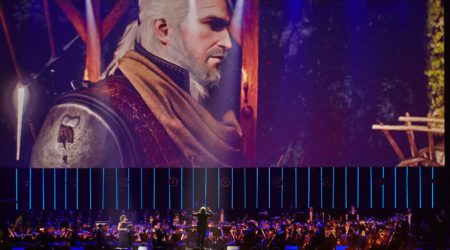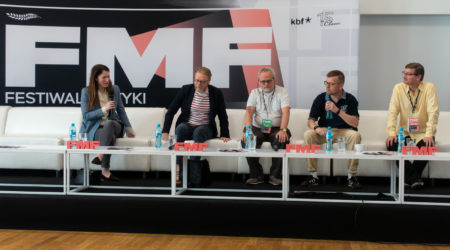
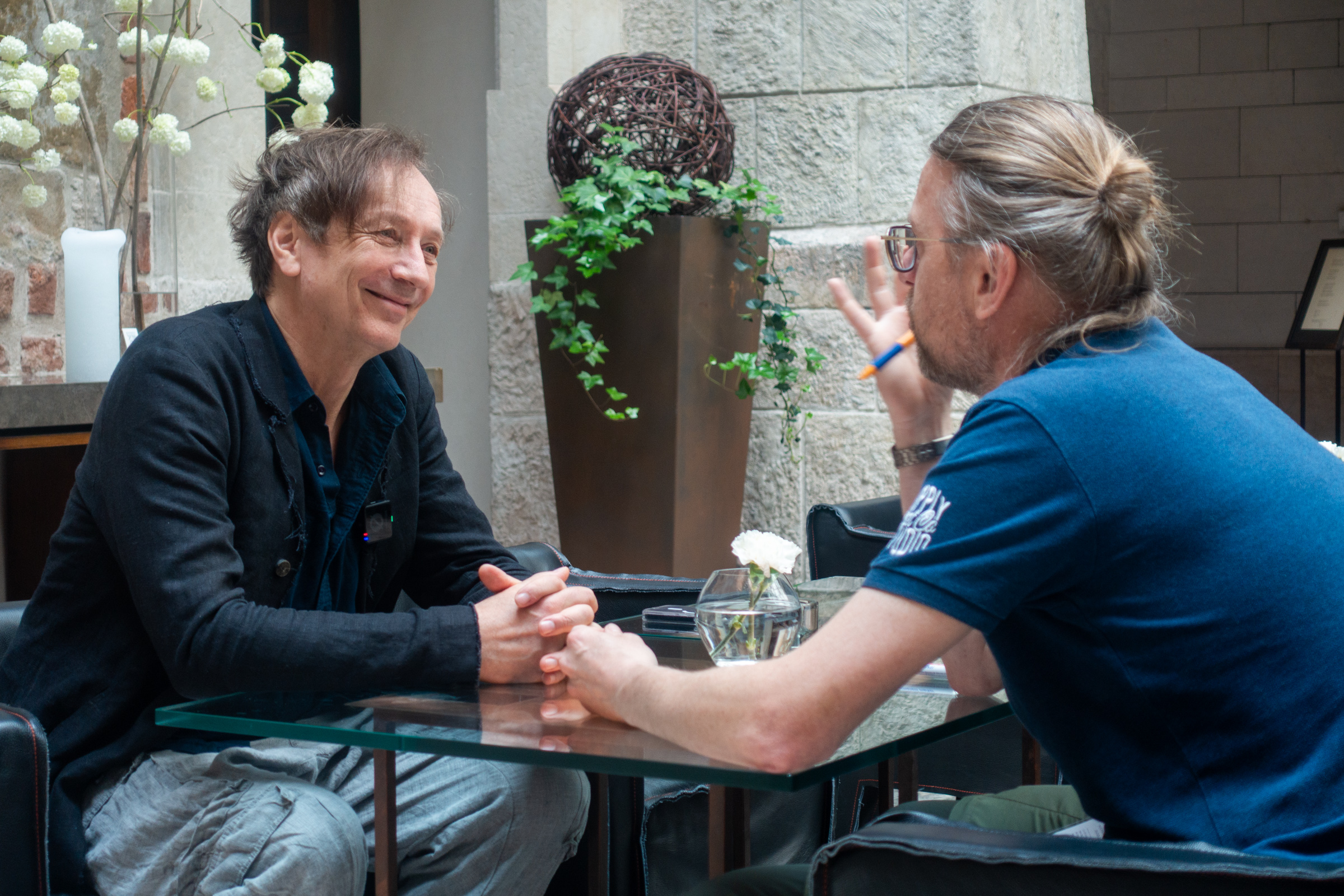
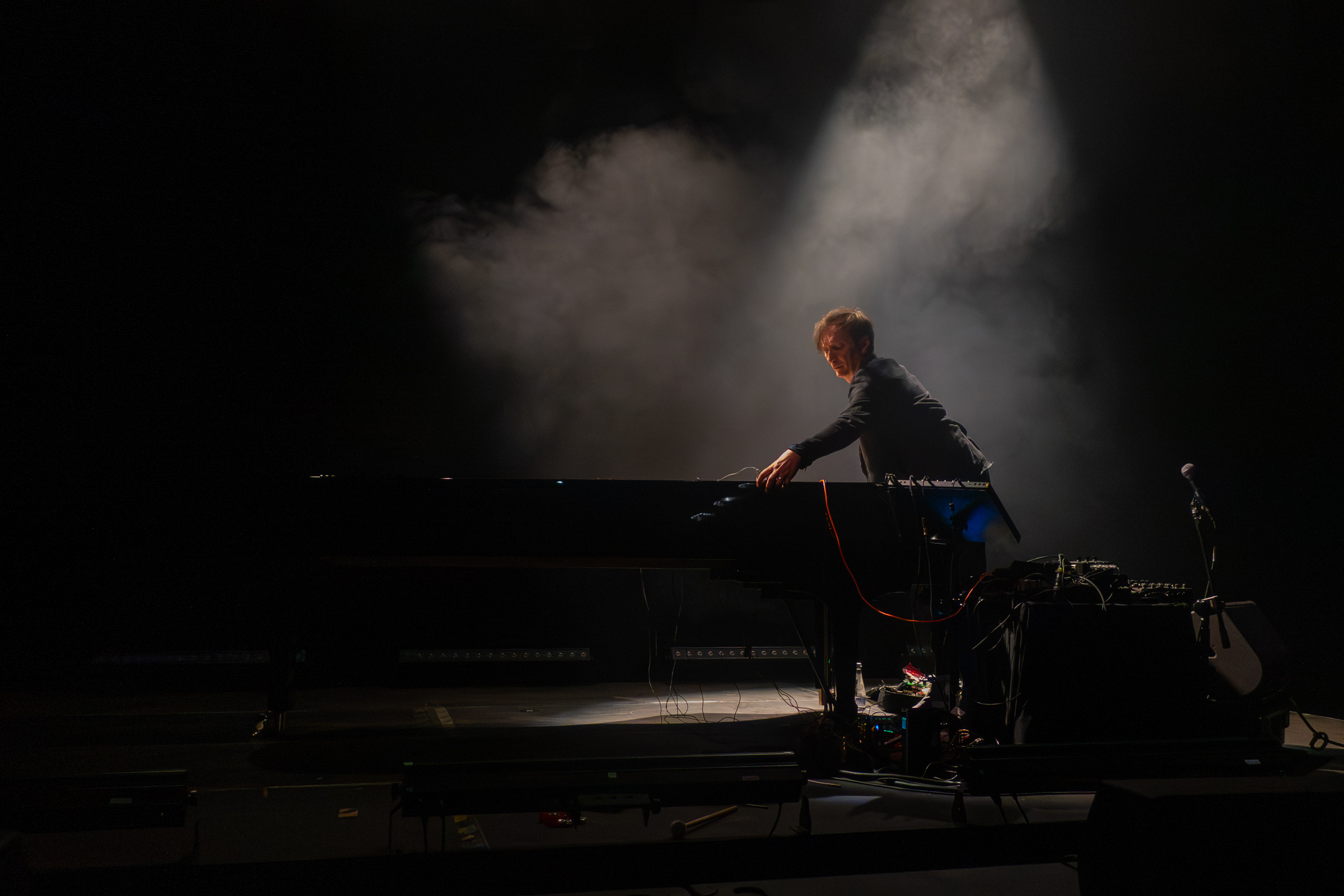
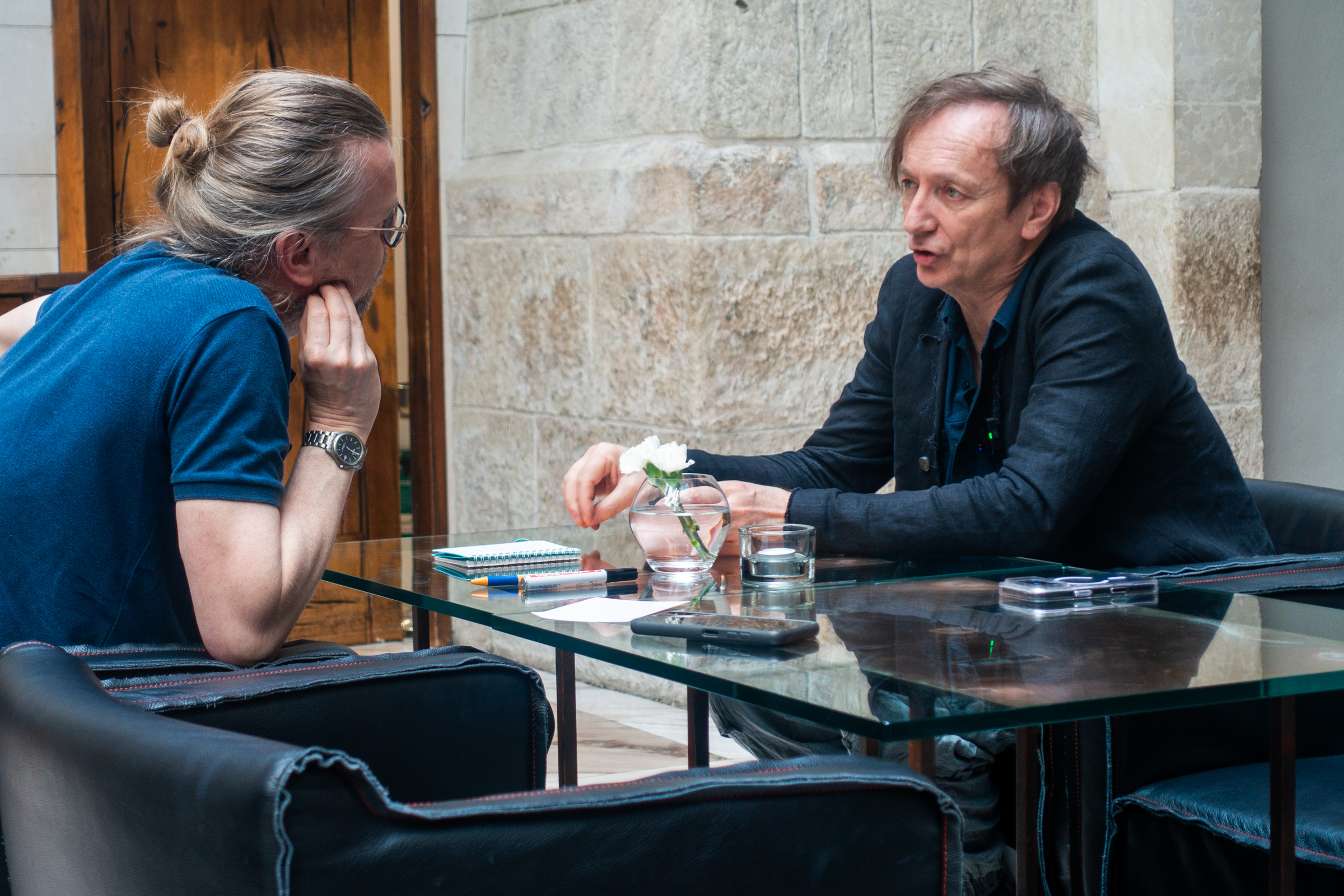
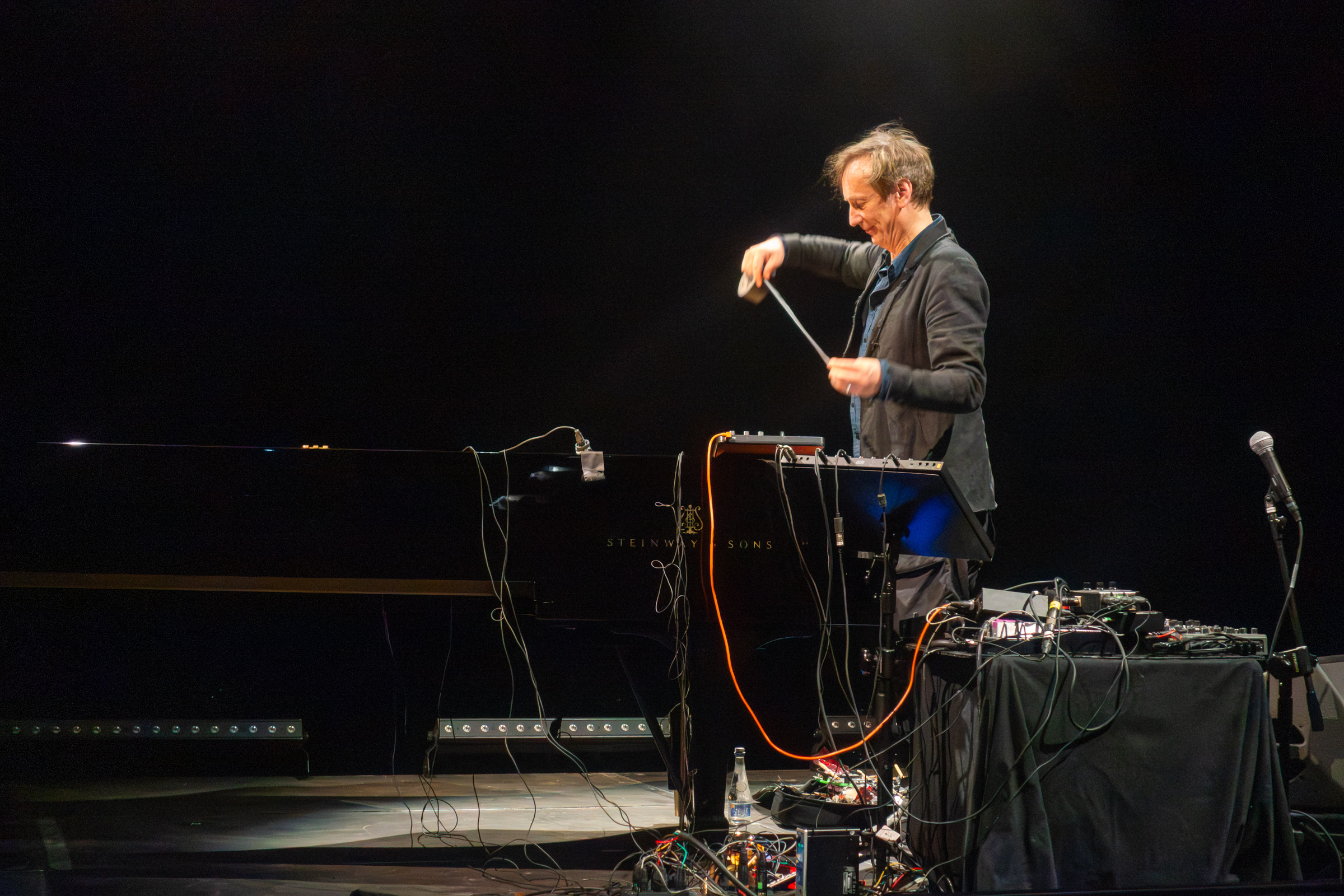
Last May, one of the main guests at the Krakow Film Music Festival was Volker Bertelmann, who has been nominated for and won many awards in recent years, including two Oscars. During this edition of the festival, he gave a concert as his alter ego, Hauschka, on a prepared piano, which is a regular piano where different objects are used to manipulate the strings to create unique sounds. During his visit, I had the honor of interviewing him on May 15, 2026. Since I will be seeing him again in Ghent next week, along with director Edward Berger, during the World Soundtrack Awards, it is a good time to publish this interview and for you, as the reader, to enjoy the stories he wanted to tell.
Anton Smit: I went to your concert here in Krakow a couple of years ago, and I saw you work with the piano. What I experienced with you and the piano back then is that you do more with it than anyone can imagine. What does the piano mean to you?
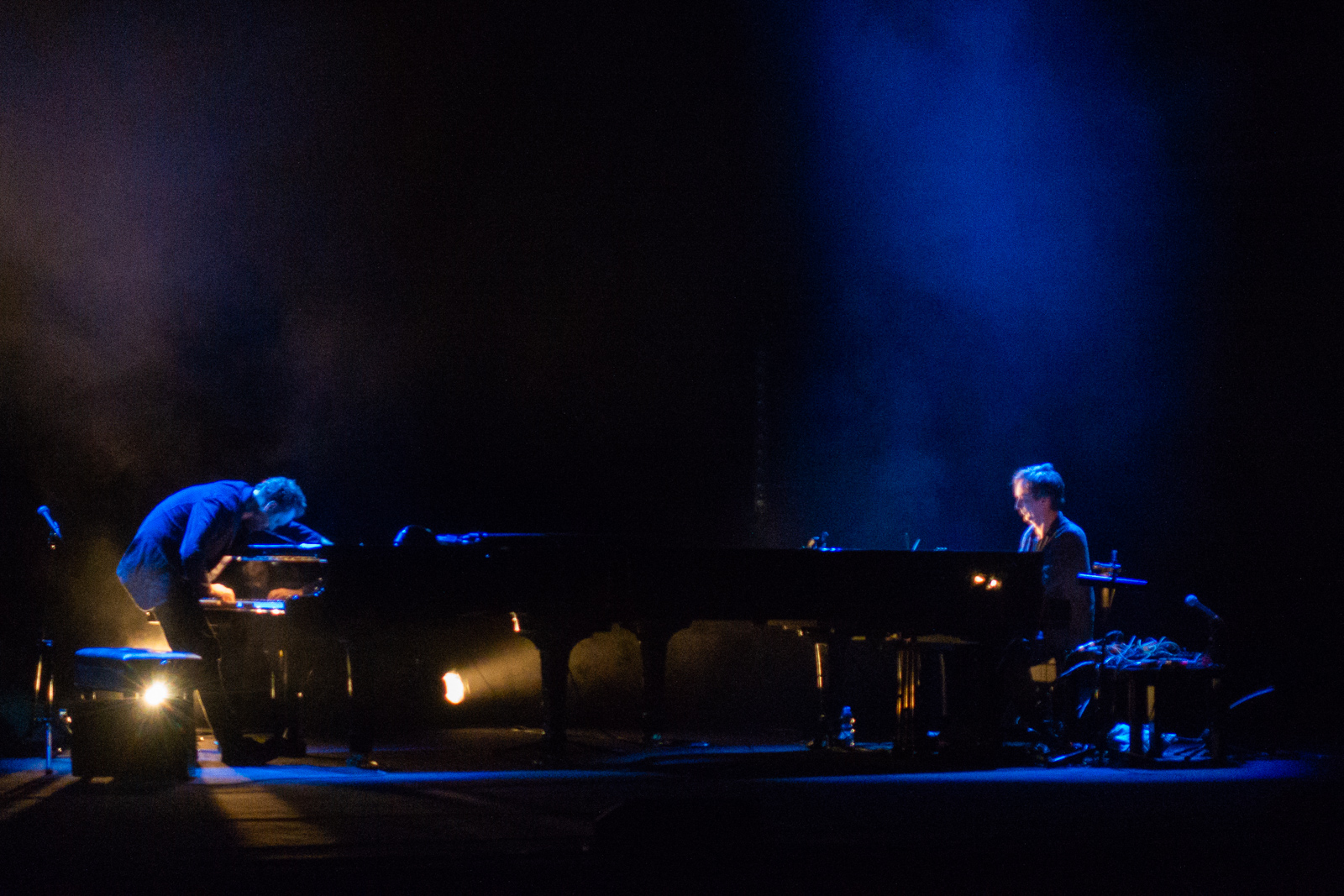
Volker Bertelmann: Well, the piano is a little bit like an extension of my arms. It is an instrument that somehow connects me with the world of music. It is an instrument that I learned the most intensively, so I can express myself with it a lot. For me, when I’m sitting there, every composing process somehow starts with a piano. I don’t have to prepare it if I don’t want to. At the same time, it’s a box of tricks. It’s something that I can manipulate in a way that suddenly I have a synthesizer, or I have drum kits that I can create. It is a wonderful piece in my life, and I couldn’t live without the piano.
AS: When did the switch happen from the classical piano to the prepared piano?
VB: If I look back, it was already happening when I was 12, because when I was 9, I was learning, obviously, Bach and Mozart and all that. When I was 12, I already wanted to have a synthesizer, but I had no money, and so I started to manipulate the hammers in the piano with metal tacks. I didn’t know that in America, for example, the tack piano is something that is very common in, let’s say, saloon places, or it was used as a manipulation for sound. When I was 12, I was doing that, and then I went straight into bands and I was using the piano also in a more Beatles way rather than in a classical way. Then through the periods of time, I obviously went through all the keyboardists that I really loved, like Herbie Hancock. I listened to a lot of records that I tried to copy. I learned quite a lot of styles slowly. So the piano was also a possibility for training different skills for me.
AS: Listening to your music, you are now a bit known about your sounds and soundscapes and stuff. That is why I want to ask you a question about Conclave. That film also starts with that style, but in the end, you get this emotional explosion of music. I’m curious: was that idea established at the beginning of your process for that movie? Or was it the end, after creating all these sounds, including the Cristal Baschet? I am curious how that came to be, because that’s such a brilliant finale to that whole movie and score.
VB: It was actually always intended by director Edward Berger to have a kind of spring-like, uprising, elevating piece at the end, because the message of the film was a little bit like that the wind has changed. Let’s give it some celebration, in a way. But I waited for that piece until the very end. I was doing the entire score for the whole film until the finish. Then, I sat down for it. I had a lot of time to actually write this piece, even though the melody in it is already a melody that the Crystal Baschet plays. That is what I love to do, actually. When I have, let’s say, an eight-bar theme. I love to use that in multiple ways. I think with All Quiet on the Western Front, that was the first time where I started to do that. Before that, I was not aware of using a three-tone motif and changing that into, let’s say, a high violin melody, and extending it to something that is emotionally completely different from what I have written too. Since then, I’ve been doing this in nearly every film, because I love playing around with one motif. I don’t want to let it go before I have squeezed everything out of it. So that was mainly my work on Conclave: I used that theme then for the end. It was difficult to play. The string players had a hard time.
AS: So we’ve already touched a bit on All Quiet on the Western Front. We have to talk about that, of course. So it’s a Netflix film and a foreign movie, but at some point, you start to notice that you could get an Oscar for it. How did you feel when you started to notice that? That it is even a possibility?
VB: It was a film in the Oscar race, and I had already won before with Lion, so I had the knowledge of how the process works. When I was nominated for Conclave, the French composers, Clément Ducol and Camille, nominated for Emilia Perez, were very new to the process of awards. I remembered when I was talking with them that I was in that same situation in 2017. When All Quiet on the Western Front was coming, I could already sense certain things, where you just feel like it could be a hot film in the end. You will never know until after Christmas how the development will be in terms of which film will continue, to get that acknowledgment, or which film will just disappear and just get out of the awards scene. Once you see that your position is somehow stabilizing in the first five, you kind of know that the signs are getting stronger. And, I think when I won the BAFTA, that was for me then, in a way, a clear sign that this might be possible. It is obviously something where you just rub your eyes a little bit and think about what’s going on.
AS: But how does it feel, as a European, as a German, to be in like this big Hollywood? Do you feel at home there?
VB: Yes. I would say you feel at home there when you have friends. I am not talking about friends in terms of working relationships. I’m talking about people that you visit at home, and you have the possibility of disconnecting yourself from the scene. Because only in these Hollywood areas, and when you go to all these screenings in Hollywood Hills, you get a little bit irritated about how they handle films. That is not because I don’t like it. It’s just for me as a European. I mean, in Germany, film music has a certain value. It suddenly becomes this very important thing, and that’s what I really love. I actually love that there is a value for it, and you can already sense that when people are requesting, if you are available for a film. I love that I’m wanted, and not that I’m a necessity. In America and England, there is a completely different, let’s say, pre-conversation. Even though music is important for a film, it’s always treated a little bit like the second and third attention.
AS: A quick one for the final question. What are you looking forward to?
VB: Well, first of all, I’m looking forward to working as long as I can as a composer. At the moment, I would say that since Conclave actually, it feels like all the bigger studios have more interest in me. I think that, in a way, the All Quiet on the Western Front Oscar was needed, and the aftermath of the films after that, to trickle into the knowledge of people who are responsible for film music. What I’m looking forward to is getting a lot of interesting films that I can also decide between, where I’m not forced to do every job that I get offered. At the moment, I am in a place where I can decide between those, which is something that is very luxurious, and I am looking forward to doing that for a long time. Plus, I am looking forward to doing concerts as Hauschka, and recording records, and going on tour, and then I’m doing films!
AS: Oh, very busy!
VB: Yeah!
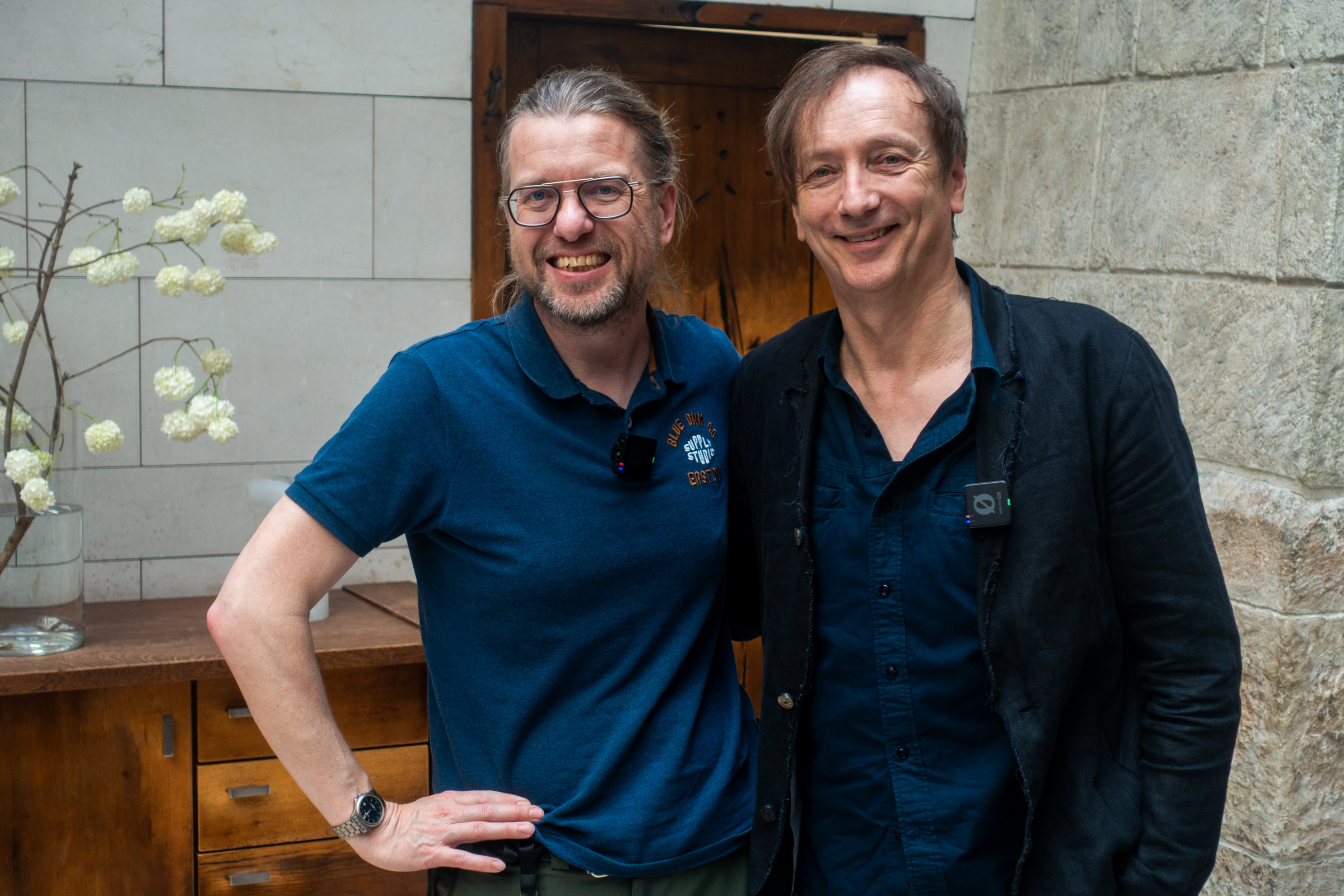
Thanks to the Krakow FMF organisation for the interview opportunity, Jorg Oostendorp for taking care of the sound and Maurice Boeijen for taking pictures during the interview.